Thursday, August 22, 2013

Travel feel at home in Ninh Binh


Ninh Binh Province is promoting tourism homestays and improving co-operation with other provinces to enhance the tourism experience, says provincial Department of Culture, Sports and Tourism deputy director Duong Thi Thanh.


Ninh Binh, homestay tour, Hue City
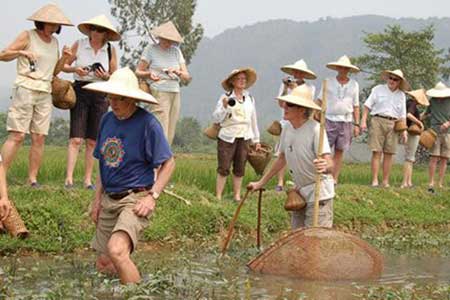
Grey nomad trail: Tourists enjoy outdoor activities during their homestay tour in Van Long District in Ninh Binh Province.
Up to 50 households in five villages in Gia Van Commune were providing homestays, Thanh said. "Each household has one to five rooms for tourists. I'm receiving good feedback."
Tourists in homestay accommodation take part in the family's daily activities, like going to the market, cooking and farming
The nation's current tourism strategies favours green tourism which Thanh said was associated with the preservation of eco- diversity and natural values.
In ties with other regions, Ninh Binh had signed a 2012 development and co-operation agreement with 10 provinces and cities with high tourism potential, including Ha Noi, HCM City, Da Nang, Thua Thien-Hue, Quang Nam, Can Tho, Quang Ninh, Hai Phong, Lao Cai, and Lang Son.
Thanh said the ties would assist tours of ancient capitals, including Hoa Lu in Ninh Binh, Thang Long citadel (Ha Noi), Lam Kinh vestige, Ho citadel (Thanh Hoa Province) and Hue City.
The provincial tourism section head, Hoang Thanh Phong said: "The province also has craft villages like Van Lam embroidery village, Ninh Van stone carving village of Hoa Lu District, and Kim Son sedge village in Kim Son District.
"When craft villages are better known, it could help create jobs for local people."
However, Ninh Binh still faced challenges, including the perception of poor environmental protection, site information and professionalism among tourist guides, along with annoying street vendors and a lack of entertainment, Thanh said.
"Employees in tourism activities will undergo training in environment protection, languages, culture and history."
Recently, Gia Sinh Commune in Gia Vien District opened the club Lang Am Thuc De Nui (Gastronomy Village of Mountain Goat). There, 20 members made a commitment to strictly observe food service regulations and to make sure prices were included on menus.
Located 93km south of Ha Noi, Ninh Binh has diverse landscapes, with the Trang An ecotourism complex boasting mountains, caves and lakes.
Among 3.6 million visitors to the province in the first six months of this year, 2.5 million went to the complex.
The Tam Coc-Bich Dong tourist destination and Bai Dinh Pagoda have also created an impression.
Ninh Binh aims to welcome 6 million visitors, including 1 million foreigners, by 2015, an annual growth rate of 10 per cent. 

Festival to promote Hanoi’s craft village tourism

 
More than 400 stalls will be set up to present tourism programmes, culinary culture and products of traditional craft villages of Hanoi and Red River Delta provinces during a festival in the capital city from October 9–12. 
Visitors have the chance to observe artisans at work and try their hand at making some products.
Several forms of folk culture like water puppetry, calligraphy and “ca tru” singing will also be introduced along with tours around craft villages in Hanoi. 
Apart from these activities, the Hanoi city People’s Committee will discuss measures to develop craft village tourism in Hanoi with participating scientists, artisans, travel agencies and representatives of international organisations.
As part of the 2013 National Tourism Year of the Red River Delta–Hai Phong, the event aims to honour, conserve and develop traditional craft villages in the region.

Tuesday, August 20, 2013

Second Da Lat in Central Highlands

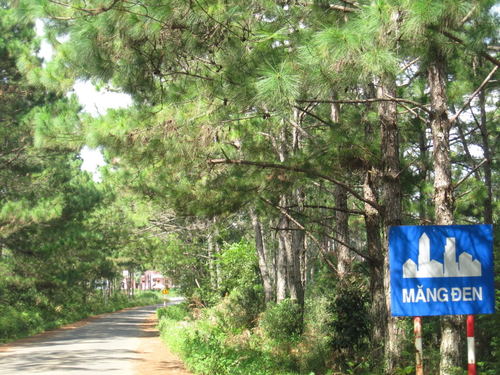
Also with cold weather, pine forests and mansions nestled in the morning dew, Mang Den is like the second Da Lat city in the majestic forest and mountain of Central Highlands.


mang den, da lat
The pine trees in Mang Den.


In the language of Bana people, Mang Den means the large and flat land. Located at an altitude of 1,200 m over the sea level, Mang Den becomes the ideal place to hide the heat and wind of the Central Highland, with an average temperature of 18-20 degrees C all the year round. About 50 km to the northeast Kon Tum City, Mang Den has a wild, pure beauty like a young woman sleeping in the woods.
On the basalt trail leading to grandeur Mang Den, anyone would mistake like being lost in the romantic landscape of Da Lat. Located between the winding passes of Mang Den and Violak, Mang Den hides itself in the primitive forests, creating a spectacular natural picture.
Mang Den Pass gives visitors shocking, refreshing feelings before the majestic scenery. Especially in winter, there are times when cloud covers the entire pass. At the peak of the Pass, visitors feel ecstasy by the beauty of the landscape of high mountains, dense forests…
While rare red pine trees are disappearing in Da Lat, Mang Den is surrounded by endless stretches of red pines. Mixed in that vast blue are songs of the forest, which are harmonized the sounds of waterfalls, water and birds.
mang den, da lat
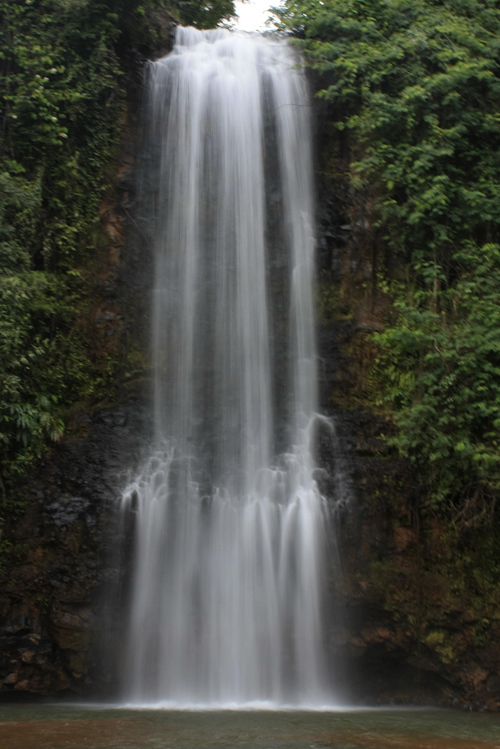
The magical beauty of Pa Sy waterfall. Photo: kontum.org.vn.

mang den, da lat
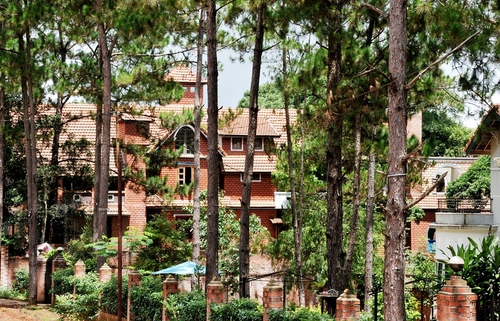
French villas in Mang Den. Photo: kontum.org.vn


Tourists can walk to the waterfall as Pa Sy, Dak Ke, Lo Ba to enjoy the love songs of the mountains, or simply stroll around the idyllic lakes such as Toong Zori, Toong Po and Toong Dam to feel the quiet moments in the nature. If you are adventurous, you can cross the forest watching blooming orchids.
Mang Den also has French style villas like Da Lat. Lovely scenery with fresh air in this place turns this place into an ideal place for those who want to feel relaxed in mind. Here visitors are also immersed in the sounds of gongs and enjoy ruou can (wine drunk out of a jar through pipes) near fire.
Not only linking Kon Tum with Quang Ngai and provinces in the central coast, Mang Den is also seen as the start of the tourist route "Highland Green Road," connecting to the "Central Region Heritage Route" and the "Ho Chi Minh legendary road" to form the trans-nation tours. These traits are enough to make Mang Den’s own place in the heart of tourists, not only known as a “shadow” of Da Lat city.

Monday, August 19, 2013

Pictures of Vietnam cuisines on American magazine

The American Journal - Martha Stewart Living - a famous magazine dedicated to American women, has published a series of pictures of Vietnamese cuisine.


vietnamese cuisines, american magazine
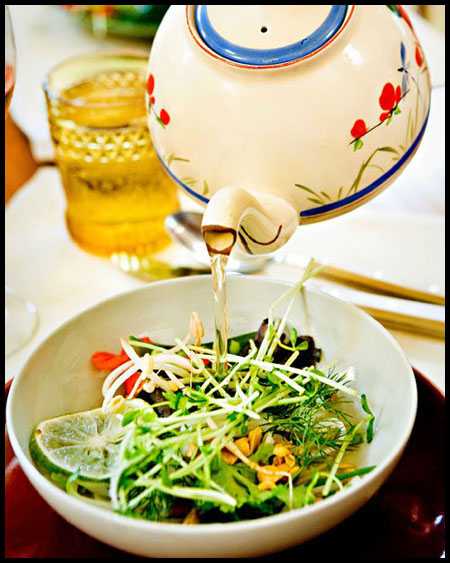
Soup with consomme pouredfrom a caremic pot.


vietnamese cuisines, american magazine
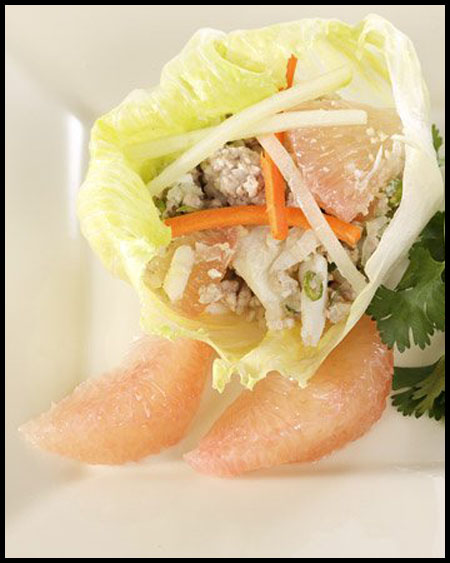
Salad with minced pork, shrimp and grapefruit.
vietnamese cuisines, american magazine
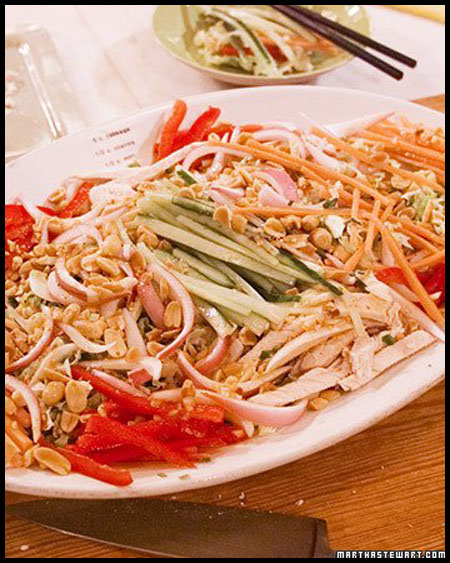
Salad with chicken.
vietnamese cuisines, american magazine
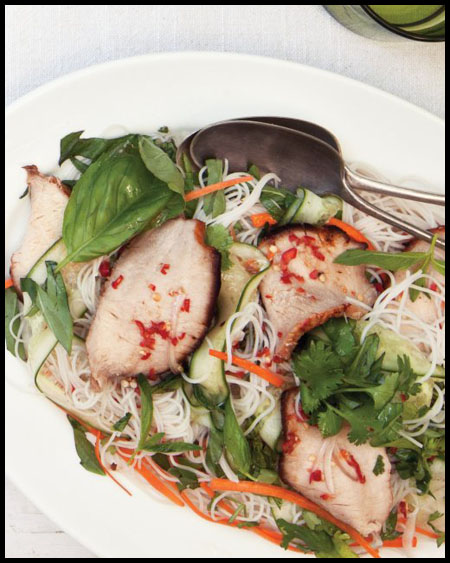
Salad with vermicelli and grilled pork.
vietnamese cuisines, american magazine
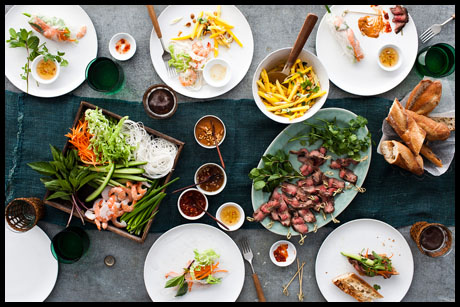
A table with many Vietnamese dishes.
 vietnamese cuisines, american magazine
Vietnamese bread.
vietnamese cuisines, american magazine
Martha StewartLiving introduces many different kinds of bread. 


vietnamese cuisines, american magazine
The difference is in the stuffing with a variety of materials.


vietnamese cuisines, american magazine
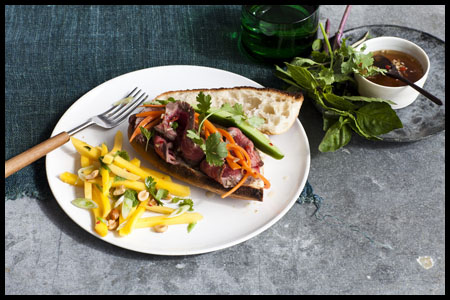
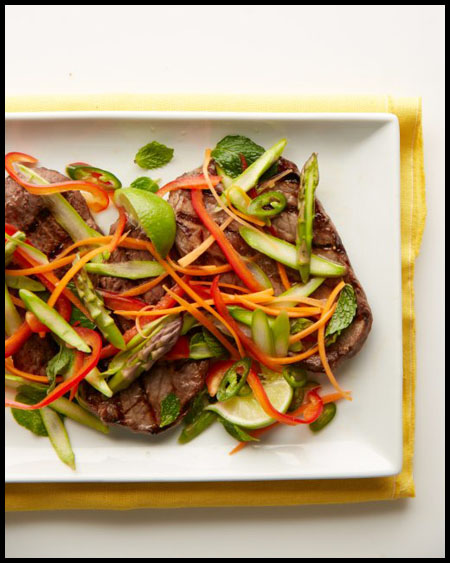
Beef steak and asparagus salad.
vietnamese cuisines, american magazine 
A cup of coffee in Vietnam style.
vietnamese cuisines, american magazine
Vietnamese cuisines are impressive because each dish goes with different sauce.
vietnamese cuisines, american magazine
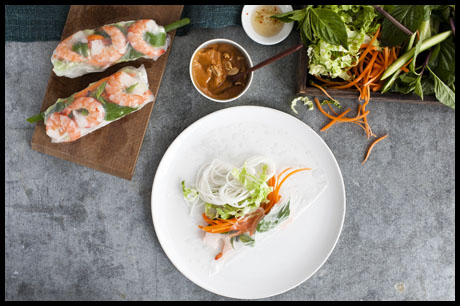
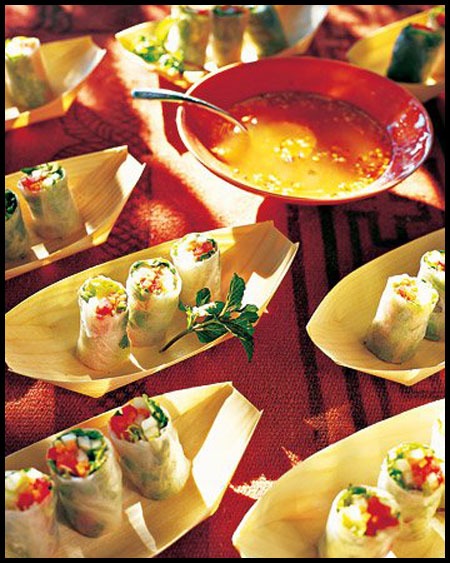
Vietnam has many kinds of spring rolls.
vietnamese cuisines, american magazine
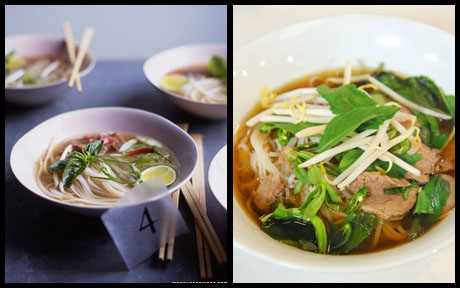
Beef vermicelli.


vietnamese cuisines, american magazine
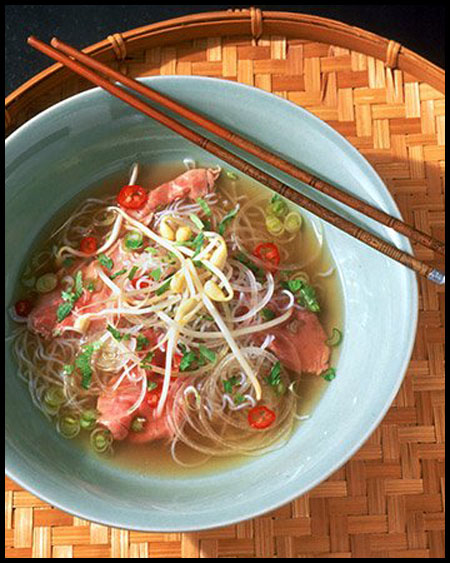
Beef noodle.


vietnamese cuisines, american magazine
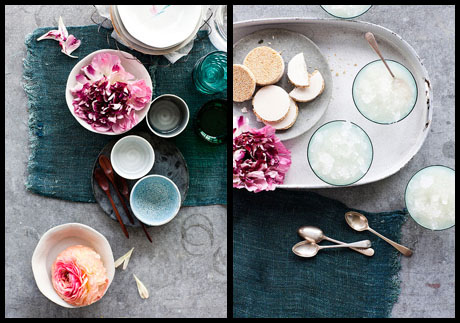
Shaved ice, litchi syrup mixed with ginger juice, served with sesame cakes.
vietnamese cuisines, american magazine
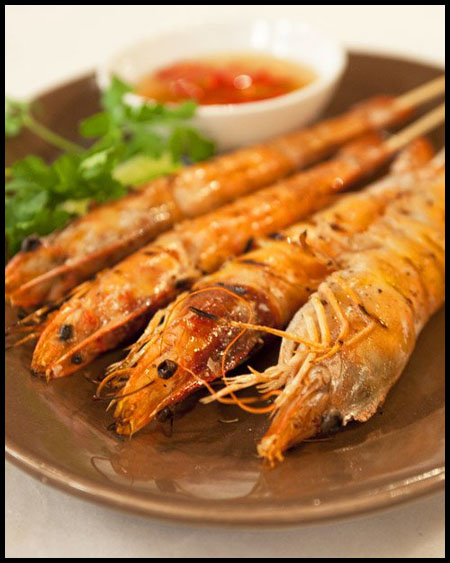
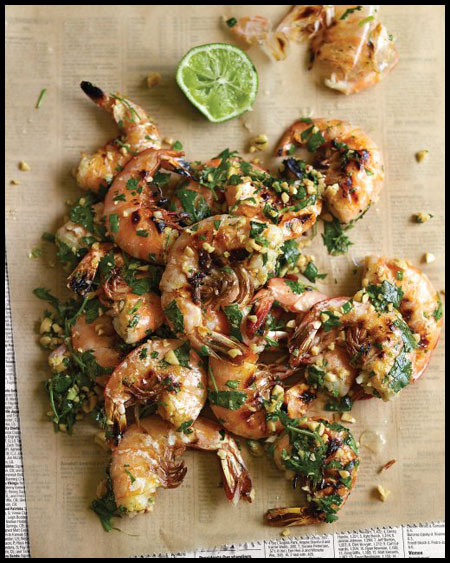
Grilled shrimp with herbs, added with crushed peanuts and a little of lemon juice.

vietnamese cuisines, american magazine
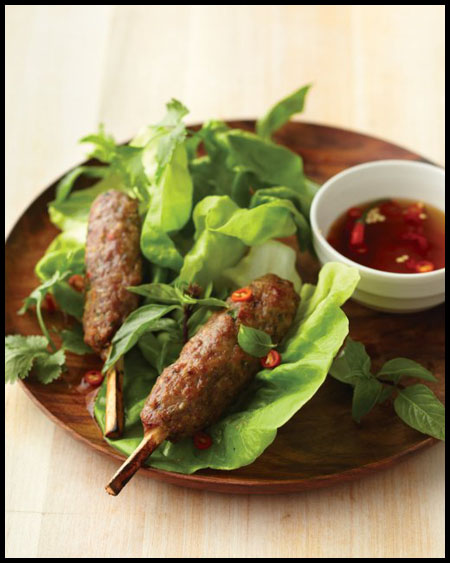
Grilled pork.


vietnamese cuisines, american magazine
Fried vermicelli served with saute shrimp and mint leaves.
vietnamese cuisines, american magazine
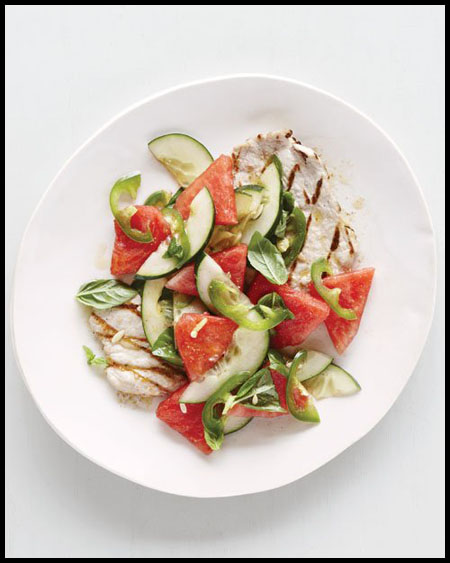
Grilled pork served with watermelon and cucumber salad.

vietnamese cuisines, american magazine 
Rice noodle with salad for hot summer days.
vietnamese cuisines, american magazine


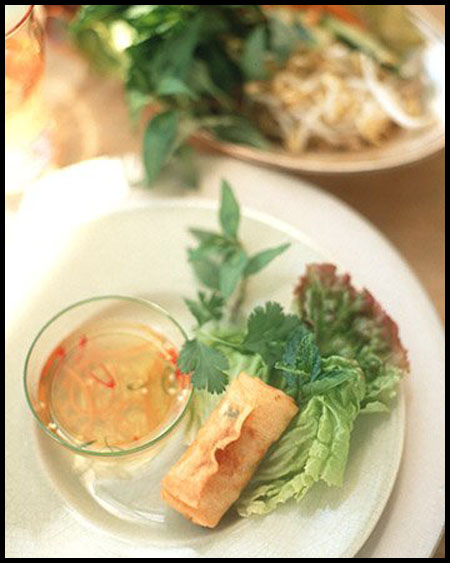
Crispy spring roll.

Chau Doc (Mekog Delta)

Chau Doc on the edge of the Mekong Delta is the stepping stone to Vietnam for travellers arriving from Cambodia. We arrived on the back of motorbikes that had collected us at the Cambodia/Vietnam border near the town of Tinh Bien which is 30km from Chau Doc (see Vietnam-Cambodia border crossings).
They dropped us at the very nice Trung Nguyen Hotel which overlooks the main market in the town centre. Nice, clean rooms with very helpful receptionist at just $10 a night. Another good budget option is the Thuan Loi Hotel which is right on the river where the ferry from Phnom Penh docks. The Song Sao Hotel is a good mid-range option located almost next to a small bookshop called 'the English Bookstore'. The charming owner loves to practice his English and will take you on private tours of the river.

21


Instead we chose to take a tour with the owner of the 'English Bookstore'. We met at his shop at 7am and walked down to the river where his friend's boat was waiting for us. First of all we headed south east along the river beyond the Victoria Hotel and met up with the approaching floating market. Our boat got right into the action and we were able to step onto one of the trader's boats as they sold all manner of fresh fruits and vegetables.
From here we crossed the river and went to see the floating fish farm houses which have fish cages under the living area. We then visited a Cham village and its mosque before returning to Chau Doc. This 2.5 hour private tour cost us just $7 for the two of us.

Sam Mountain

The other main tourist attraction of Chau Doc is Sam Mountain which is 6km from town so you'll need some transport. On our first night we were 'stalked' by one of the cyclo riders who seemed to pop up no matter which street we were on. He wanted $5 to take us to the mountain so we agreed to meet him the next afternoon and head there for sunset.


The cyclo rider picked us up at 3.30pm arriving with his wife and Downs syndrome daughter. The poor bloke works 24 hours a day to support his family as as his wife has to stay at home to look after their child. They could put her in a government school but then they'd never see her again. The cyclo man just puts his situation down to Lord Buddha and just gets on with it with a big smile on his face. A lesson to us all!
A couple of moped riders gave us a push on the way to the base of Sam Mountain then our man showed us around Tay An Pagoda, the Temple of Lady Xu and the Tomb of Thoai Ngoc Hau. The moped drivers then took us to the top of Sam Mountain (for a small fee) then waited for us so that we could watch the sunset over the endless padi fields with Cambodia in the distance.

It was a hard cycle back in the dark without the help of the mopeds, even more so when we got a puncture. When we paid the rider more than he'd asked for and paid for his puncture to be repaired ($7.50 in total) he seemed quite concerned and informed us that we'd given him more than we'd agreed and wanted to be sure that we were aware of it!

Ba Vi National Park offers escape from hustle of Hanoi

Ba Vi National Park offers escape from hustle of Hanoi
In spring, the forest is highlighted with striking colours of wild peach blossoms and apricot flowers, while in summer the dense forest is dryer and brighter with light sunshine beaming down through thick layers of leaves. Autumn covers most of the trees with yellow coats and winter seems to bring a fresh cool air to the space.
Located in the middle of the northern plain, Ba Vi (Three Peaks) is mentioned in the ancient legend of the Mountain God Tan Vien, and is said to be his final resting place.
The highest peak, known as King Peak, is 1,296m, followed by Tan Vien Peak (Mountain God) at 1,227m and Ngoc Hoa Peak at 1,131m. There is a temple dedicated to President Ho Chi Minh on King Peak and another to worship the Mountain God on Tan Vien Peak.
At the entrance to the park is Tien Sa Tourism Site, where a 20ha lake is surrounded by a 120ha forest.
The site is divided into several themed zones to suit various ages, including a water park of 3,000sq.m with three swimming pools and nine slides and a games area of 2,500sq.m.
Young people can enjoy boating or play tennis, football, volleyball and badminton.
Following the sloping zigzagging 12km road from the park gate, visitors will have a chance to see the rich local flora and fauna. The park is home to more than 1,200 kinds of plants, 21 of which are mentioned in Vietnam ‘s Red Book of rare and threatened species. There are also 63 species of animals.
Some old vestiges of the French occupation have recently been opened to the public at 1,000m above sea level thanks to the upgraded road leading to the ruins.
According to a French document dating back to the 1930s, the French planned to build three resorts at heights of 400, 600 and 1,000m above sea level, and were particularly keen on developing the highest one. Between 1932 and 1944, they built various facilities like a hostel, playground, church, orphanage and military basement which can still be seen today.
A jail was also built in the 1930s capable of holding up to 200 prisoners, and some of the implements used to torture the prisoners are now on display.
A new trekking route has been opened leading up to some of the parks oldest trees, mostly Bach Xanh (calocedrus macrolepis). Hundreds of them flourish at an altitude of 1,000m, and the tree offers fine wood with a gentle fragrance which is easily processed into furniture and houses.
At the end of the road, climbing over 1,000 steps leading to the temples on King Peak or Tan Vien Peak is another unforgettable experience.

From King Peak, the scenery looks like a huge painting with giant “strokes” of green grass fields, yellow rice crops and the Da River zigzagging through the undulating hills.

Cham Island – a place to discover

Cham Island – a place to discover
Considered as a beautiful pearl of Hoi An in the central coast province of Quang Nam, the Cham Island has many interesting things to explore.
Situated about 15 km from Cua Dai beach, Cham Island comprises eight islets. It is endowed by nature with terrific advantages: nice weather all year round, unspoiled and beautiful beaches and great landscape. Visitors can discover and enjoy many things on the island.
In 2009, the island was recognized as a world biosphere reserve by UNESCO. It has more than 1,500 ha of natural forest and more than 6,700 ha of water surface, and is home to a critical ecosystem that includes coral reefs, seaweed and sea grass beds. The area is also rich in marine resources, including many species of ecological and economic importance.
Given these advantages, the Pearl of Hoi An has attracted tourists who are interested in adventures and nature discovery. Picnic, camping and scuba diving are among the top choices of visitors. Many positive reviews have been given by international visitors on the famous tourism forum tripadvisor.com. A New Zealand tourist who visited Cham Island in July wrote: “We had a great day out with the team from Cham Island Diving. Not only reasonably priced, but a brilliant seafood lunch, beautiful relatively quiet beach stop and great snorkeling spots.”  A Hong Kong visitor commented: “Great atmosphere, beautiful beach and fun diving!”
Some other tourists said Cham Island diving was worth of 5/5 points.
Besides a rich ecosystem, the Cham Island Marine Protected Area’s ancient monuments absolutely captivate tourists. The excavated ruins are proof of the former cultural and trade exchanges between Cham Island and countries in the region. The island was once a transshipment point of international merchant ships on the maritime silk road found in the 13th century. Famous vestiges such as Hai Tang Pagoda, Cham Well in Cam village, Temple of the Founder of the Edible Birds Nest Industry, Mausoleum of the Tutelary God reflect the prosperity of the ancient Cham and Vietnamese people thousands of years ago.
For those who like tranquility, unspoiled countryside and relaxation, the island is an appropriate destination. Its beaches which are almost untouched by humans are as beautiful as those on Phu Quoc Island off Kien Giang Province in the country’s south. Visitors can enjoy the fresh air and warm sunshine. However, the island is less known due to insufficient promotion and inconvenient transportation.
Visitors can also stay overnight at a fisherman’s house. The islanders are friendly and honest. Visitors will enjoy savoring rustic but delicious dishes made with wild vegetables, fish, squid and pickles and listen to the home owner’s fishing trip stories or legends about the island.

Those who want to go to Cham Island to simply enjoy fresh seafood could take a squid catching or fishing tour. Travel agents and fishermen will take them to a fishing ground. Caught fish and squid will be served at a restaurant or right on board.