Wednesday, July 31, 2013

Phong Nha Cave listed among top world destinations

Vietnam’s world heritage Phong Nha Cave in the central province of Quang Binh has been certificated as one of world’s best destinations by the US famous tourism website TripAdvisor.


Phong Nha Cave, Quang Binh, spectacular natural sights, TripAdvisor
According to Le Thanh Loi, Director of Phong Nha-Ke Bang National Park, the grotto is rated 4.5 of 5 points for successful tourism sites in terms of professionalism, service style, and spectacular natural sights.
He stressed that the TripAdvisor’s certificate is testimony to the co-ordinated efforts of the national park management to promote local tourism, attraction and investment.
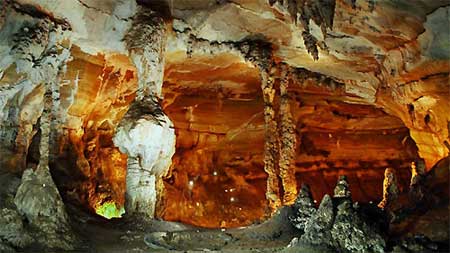
Recently, Phong Nha cave has been upgraded with a lighting system to ensure safety for visitors and make it become an aquarium on earth.
TripAdvisor is a travel website for customers to gather information, and opinions on travel-related issues and engage in interactive travel forums.
The website is free to users and supported by an advertising business model.
Established in 2000 by businessman Stephen Kaufer, is has been used by more than 32 million people in 30 countries.
Source: VOV

First funicular in Vietnam constructed in BaNa Hills

BaNa Hills
The construction of the first funicular, or inclined railway, in Vietnam has been kicked off by Ba Na Service Cable Car Joint Stock Company in the central coastal city of Da Nang.
The inclined railway system, called Ba Na By Night, will have a total length of 380 metres and speed 5 metres per second, with capacity of about 80 passengers each cabin. It is built using technology of the Swiss ropeway manufacturer Garaventa.
Together with the launching of the Toc Tien Waterfall – Indochine telpher route with four Guinness World Records, the construction of the first funicular in Vietnam affirmed the uniqueness of the tourism development in Ba Na hills.
The Ba Na By Night inclined railway system is expected to be completed and operational in March 2014./.


Source: http://www.vietnamtourism.gov.vn

Tuesday, July 30, 2013

Danang Vietnam (Travel Guide)

Danang Vietnam is a town located in the western banks of River Han. Placed in the central part, it is the fourth largest city of Vietnam. With beaches, hills, heritage buildings and other lovely constructions adorning the city, Danang is definitely one of the most visited of the Vietnam popular destinations and must feature in your trip to Vietnam. Its lovely weather condition is another incentive for visiting this city.
Some of the major tourist attractions in Danang are:

Nam O Beach: Placed at a distance of 17 kilometers northwest of Danang Vietnam, it offers environmental boat rides to places like Hoa Bac and Hoa Bang district.

(China Beach) My Khe Beach: This beach is very popular among the natives and tourists alike. It offers many outdoor activities and is full of hotels, restaurants, and other services.

image3sindefx

Hai Van Pass: It is the highest pass in Vietnam, situated about 1,500 km above sea level. Literally the name stands for “pass of the ocean cloud” and is a truly beautiful place. From the peak of the pass you can see the Danang City, Tien Sa Port, Son Tra Peninsula and the sea shore, all from a birds-eye view.

Marble Mountains: Located 12 kilometers westwards from the city, this place is one of the most charming tourist attractions in Danang. It is also known as the Ngu Hanh Son or ‘Mountains of the Five Element’. Its five summits are named accordingly; Thuy Son which means water is the highest, Moc Son meaning wood, Kim Son denoting metal, Tho Son signifying soil and Hoa Son is fire. This place is also well-known for its marble crafts.
Apart from these popular tourist spots of Danang in Vietnam, there are some other well-liked spots at such as Danang Cathedral, Caodai Temple, Tam Bao Pagoda, Pho Da Pagoda, Cham Museum, Dien Hai Citadel, Ba Na Mountains, Son Tra Peninsula and lots more.

Source:http://vietnam-cambodiatravel.com/cities/danang/


12

News - Museum of Ethnology ranks high

Museum of Ethnology
The TripAdvisor.com tourism website has ranked the Vietnam Museum of Ethnology as excellent.

This is the second time the museum received this rating from the website. 

To be recognised, tourist destinations need to be rated above four stars on a five-star scale based on reviews and votes posted on the website within the last 12 months.
 
The museum was cited among the most attractive tourist destinations in Hanoi for 2012. 

This year, the museum received 500 votes of excellent, 357 votes of very good, was rated four and a half stars overall and ranked sixth in the list of 25 most attractive museums in Asia. 
Visiting the museum, located on Nguyen Van Huyen street, Hanoi, tourists can learn about the history and diversified culture of the 54 ethnic groups of the country through indoor and outdoor exhibitions. 
The museum attracts tourists thanks to rich collection of objects, photos, videos and documents, as well as the different types of model houses that represent how ethnic groups from all over Vietnam live. The museum receives about 60.000 visitors annually.

Mai Chau -Hoa Binh ( Travel Guide)

Mai Chau is located in Hoa Binh province, about 135km (83 miles) from Hanoi and 60km (37 miles) from Hoa Binh. Mai Chau is well known for its natural beauty. The valley is home to many ethnic minorities, including the white Thai. From the top of Cun Mountain, the panorama of the lush green valley with its stilt houses is laid out before you.
Everywhere, the stilt houses border both sides of the roads. The houses are quite large with palm leaf roofs and bamboo-slat floors. The kitchen is located in the center of the house; the cooking as well as the making of the colorful "tho cam" takes place in the kitchen. This material is used by the Thai minority to make their clothes. The windows are large and decorated with patterns. Each house also has a pond to breed fish.
The Sunday market brings a lot of people into town. It is full of l ocal products and a mass of color, sights and sounds. People from different minorities living in the nearby mountains come to Mai Chau market to sell their specific products: honey, bananas, corn, and "tho cam" made by skilled Thai women. As important as the commercial aspect of the Sunday market, it is also a social occasion for people whose remote mountain homes isolate them for the remainder of the week.

24


Attractions in Mai Chau
Folk arts of Hoa Binh ethnic group
Hoa Binh has an invaluable treasure of folk arts of ethnic groups. Hundreds and thousands of traditional songs and dances have been developed and nourished into precious property of cultural life of Hoa Binh ethnic groups.
There are three types of art performance: music instrumental performance, folk singing and folk dance. Instrumental performance includes drumming (Muong ethnic group), Cong Chieng playing (Muong ethnic group); chorus of flute and musical instrument (Thai ethnic group); Vi dim folk song (Muong style); khap singing (Thai style), doi singing (Tay style); song of calling lovers (H’Mong), effervescent dances: keng long dance (Muong), Cha Chieng dance (Thai), Chuong dance (Dao), Khen dance (H’Mong), etc …
Visitors will be attracted by special rhythm of Chieng, Drum and castanets, infatuated with ardent Can wine, and seductive smile of mountain girls in their flexible and graceful dances. This will be the most enjoyable moment during your stay in Hoa Binh. Performances may be served in any place at your optinon.


Attractions around
Muong minority hamlet
Situated in Binh Thanh commune, at the foot of the Mo mountain and 12 km away from Hoa Binh town . Giang Mo village has got 100 houses in their original form with daily activities, hand-made water conducting system, water rice mortars, bows and Cross-bows, farming and traditional festivals and practices of Muong ethnic group.
You can visit any families you wish to, where you will be warmly welcomed. You ca also watch folk arts and culture, buy souvenirs made by Muong people themselves. Even more interesting is listening to the host's fluting, playing their traditional musical instruments next to the most fragrant "can wine" jar ( pine wine). The most distinguished is its peaceful and dreamlike atmosphere, which will bring you to a safe and casting world, 1 km far from Muong village is Red Dzao - A tourist destination that has usually been reached by visitors for many years.

78imag1es


Kim Boi hot mineral spring
Kim boi Spa is 30 km away from Hoa Binh town. Crossing the zigzagging Cun slope. visitors will have the opportunity to view the panorama of Hoa Binh town from top down and freely admire the picturesque and charming mountainous landscape all the way during the journey.
Kim Boi Spa is built on a mineral water spring that streams out from the ground with a temperature of 34 degree centigrade containing many essential minerals for heath. Here, visitors can bath or swim in private or public swimming pools.

Hoa Binh Reservoir
Have you ever heard the name "Ha long bay in Mountain "? This is Hoa Binh ‎reservoir. This is the biggest man-made reservoir in Vietnam that not only supplies ‎water for the Hydro-electric power plant in Hoa Binh but also an attractive tourist ‎destination. With the length of 230 km, the surface area is 230 km 2 between ‎numorous mountains and forests around cloud-covered and hundred islands spread ‎just like Ha long bay. Apart from that, there are many villages of ethnic minorities ‎such as Muong Thai ,Dzao... along two river sides still preserve traditional life ‎styles .‎
Tourist may stay over night on board to admire romantic moon-nights and enjoy ‎locally typical food or relax yourself in houses on stilts to listen to folk songs, to ‎dink pine wine or to take part in traditional dances of local inhabitants.‎
You can feel the imposing beauty of Hoa Binh reservoir area as first sun rays ‎emerge though clouds to lighten reservoir surface or dye it violet at nightfall.‎

Getting There

By bus: available at Ha Dong station
By motorbike
By car

11


Hotels & accommodation in Mai Chau

Below is a list of hotels in Mai Chau sorted by price range (highest first). If you wish to telephone a hotel the area code for Mai Chau is 018 (+8418 from outside Vietnam).
  • Mai Chau Guesthouse
    Price Range: Up to $25 per night
  • An alternative to a hotel is to stay at one of the Thai stilt houses. This type of accommodation can be included in the price of a tour. They are cheap but still have clean and hygienic facilities.

What to eat
The hosts are great chef! they cook excellent Vietnamese food for tourists , breakfast is western style with bread, butter, cheese, egg ..(homestay in house on stilt)

Monday, July 29, 2013

Vietnam cambodia travel: Hue Travel Guide

Vietnam cambodia travel: Hue Travel Guide: Geography of Hue Hue is a province located in the northern part of Central Vietnam. It is encompassed between Quang Tri Province to the...

Hue Travel Guide

Geography of Hue
Hue is a province located in the northern part of Central Vietnam. It is encompassed between Quang Tri Province to the north, Da Nang and Quang Nam provinces, to the south (with the boundary of the Hai Van Pass), the Eastern sea to the east and Lao PDR to the west (with the boundary of the Truong Son Mountain Range). The provincial capital, Hue, the old imperial city of Vietnam under the Nguyen Dynasty, is 660km south of Hanoi and 1,080km north of Ho Chi Minh City.
At the meeting of the 17th session of the World Heritage Committee (WHC) in
Columbia, from the 6th to the 11th of December 1993, UNESCO has come to the decision of recognizing the architectural ensemble of Hue as a world cultural heritage. On 2 August 1994, the delivery of the recognizing text has been organized at the Imperial Palace of Hue, with the participation of many international, national and local personalities, as well as representatives of the population of Hue. Great enthusiasm has been generated in the country through the broadcast of this news. This was a noteworthy event in the cultural history. For the reason that Hue is the first site in Vietnam ever listed in the World Heritage list.
As to the cul¬tural value, a World Cultural Heritage Site, like the city of Hue, has to:
- Be representative of an original artistic achievement, a masterpiece created by Man's hands;
- Have a great value for its building technique or its architecture in a general development plan for a city or in a program for the embellishment of the sight of a world cultural zone;
- Be representative of an architectural ensemble of an important historical period; be closely related to important events, to ideas or beliefs having a great influence or to famous historical personalities.


21

Besides, for a cultural property to be internationally recognized, it has to be fully confirmed on a juridical level, and it must possess a managing organization ensuring its good conservation. The architectural ensemble of Hue meets these requirements; it is embedded with highly humanistic values, and may be compared with the other cultural properties, rare and precious, in this World.
In the closing report of the above-mentioned meeting, the WHC has briefly assessed the value of Hue as follows. 'The architecture of Hue, which has been the Capital of a unified Vietnam, built at about the beginning of the 19th century, combines the oriental philosophy with the traditions of Vietnam. Intimately mingled with the natural environment, the beauty and special richness of the architecture and decorative art of the building are an original image of the Vietnamese monarchy at its most prosperous period'.
The fact that the imperial city of Hue is now listed as a World Heritage Site may represent a new chance for Thua Thien Hue Province and for the whole country in general. The wonders of Hue can hardly be described to do them justice, and the best way to discover them is still to come in person and admire the beautiful constructions.
It is next to Quang Tri Province to the north, Danang to the south, and Quang Nam Province to the south-west. This province leans up against the Truong Son mountain range and is washed by the East Sea, along its 120km seashore.

Hue Climate:
The weather is submitted to tropical monsoon climate divided into four distinct seasons: fresh spring, very hot summer, mild autumn and windy, cold winter. The dry season lasts from March to August. It is hot with temperate rarely reaches to 39.5ºC. The rainy season lasts from September to February. It is quite cold with average temperature is 19.7ºC, but sometime down to 8.8ºC. In this time, it rains a lost, sometime lasts all day. If tourist would to avoid rainy, they come to Danang City, 108km from south of Hue. In the mountain area, the weather is cool with the annual temperature is between 9ºC and 29ºC. The most convenient time to visit the area is from November to April.

34

Hue Tourism
Hue offers very diversified and beautiful landscapes. Nature and human beings create a harmoniously beauty with Bach Ma (White Horse) National Park and other attractive beaches such as Thuan An, Lang Co and Canh Duong.
The province provides a well-balanced blend of royal heritage and folk culture. As a matter of fact, tourists discover dozens of handicraft villages, with annual festivals that are painstakingly organized.
Hue is also an important center of Buddhism. In Hue and its surrounding still exist tens of pagodas constructed more 300 years ago, and hundred of temples and pagodas built in the early 20th century. Besides, tourist is able to enjoy many traditional famous dishes and find out about sophisticated handicraft here.
Hue Citadel has been recognized as a World Cultural Heritage Site by UNESCO since December 1993, Hue Royal Musical (Nha nhac) has been declared as a World Intangible Cultural Heritage since November 2003.

Hue Transportation
Transportation by train, road, air and water routes is very convenient.
Train: The Thong Nhat Express trains from Hanoi to Ho Chi Minh stop at Hue Railway station. The local trains come to some other provinces.

Air: Phu Bai Airport serves flights: Hue - Ho Chi Minh City and Hue - Hanoi


Phong Nha cave listed among top world destinations

Vietnam’s world heritage Phong Nha cave in the central province of Quang Binh has been certificated as one of world’s best destinations by the US famous tourism website TripAdvisor.
Phong Nha cave listed among top world destinations
According to Le Thanh Loi, Director of Phong Nha-Ke Bang National Park, the grotto is rated 4.5 of 5 points for successful tourism sites in terms of professionalism, service style, and spectacular natural sights. He stressed that the TripAdvisor’s certificate is testimony to the co-ordinated efforts of the national park management to promote local tourism, attraction and investment.
Recently, Phong Nha cave has been upgraded with a lighting system to ensure safety for visitors and make it become an aquarium on earth.
TripAdvisor is a travel website for customers to gather information, and opinions on travel-related issues and engage in interactive travel forums.
The website is free to users and supported by an advertising business model.
Established in 2000 by businessman Stephen Kaufer, is has been used by more than 32 million people in 30 countries.

Source: VOV

Learning to live in Hanoi

(VOV) -As I lay eyes for the very first time on this city which I came to know and appreciate, all I can see is a buzzing chaos everywhere around me.

I am amazed at how many times the cab driver honks the horn and at how the motorcycle riders driving past us do not seem the least bit bothered by the blaring sound of it.
I try to count the number of karaokes I see, but I soon abandon, for there must be one appearing every other minute. Come to think of it I might as well have tried to count the number of 'cafes' or 'pho' stands on the way, just to realise how futile a task this would be.
People are going about their daily routine in this tumultuous city as a couple of friends and I make our way, packs on our backs, to our hostel. The dorms are exactly the way the travel guide depicts them, clean but humid, comfortable yet noisy, this is no surprise, I knew what to expect travelling on a low budget. Heading out to enjoy the traditional North Vietnamese 'pho', we go over a few stands but all of them seem to be full, we end up going to the first one with some free sitting stools.

After a disastrous ordering experience, we receive a bowl of what we think must be 'pho', we were in for a treat; our first meal turns out to be a cow stomach and bamboo shoots noodle soup. I manage to finish it, my two friends look at me with puzzled looks on their faces, full bowls in their hands and a grumbling in their stomach: we were off to a great start!


 Learning to live in Hanoi
I am one of the many expats teaching English in Hanoi, though unlike most, my staying here was never planned to begin with.
Originally the plan was to explore the northern region of Vietnam and visit a few acquaintances along the way. With the sole purpose of travelling inside Southeast Asia, no intention of going back home anytime soon, one thing leading to another, I found myself sharing a huge flat with 12 interesting characters and working part-time in Hanoi.
Venturing across this maze of a city on my rental scooter, I quickly became accustomed to the ways of the road in Viet Nam. What I thought was a complete mess upon my arrival was really nothing that bad seen from inside the traffic. I would simply compare it to a school of fish moving together: once in it, I just had to go with the flow, the difficulty lies in joining in the first few times.
The next step was to acquire basic conversation skills, which is easier said than done. To find someone willing to teach you Vietnamese is probably one of the easiest things in Hanoi.
Nevertheless, learning it is something entirely different. There are a lot of young students looking for a chance to practice English with a native speaker and most of them will be glad to teach a few Vietnamese sentences as an exchange of services.
I remember walking by Hoan Kiem lake and sitting down on a bench to read or to study; I have never spent more than half an hour sitting alone. At some point, someone would ask if they could sit down and speak English with me. I never refused the opportunity and made a point of practicing Vietnamese as much as I could. Making new friends had never been so easy!
Aside from my first meal in Viet Nam, pretty much all I have tasted so far has been a real delight, or if not so, a particularly interesting culinary experience. My first impression couldn't have been further from reality, the impressive variety of meals I could try and enjoy over the last year all account for it.
The endless array of restaurants, bistros, street stands and the famous 'bia hoi' all around town is remarkable, considering that a good portion of them have only one meal on their menus to attract customers: these are the ones I wanted to try.
One item on the menu means a lot to me: if they managed to stay opened with that, they must know what they're doing and indeed they do! The way to prepare food here is far from what I was used to back home and having been a chef for 7 years gives me a good perspective.
First of all, there is none, or very little, refrigeration. The need to stay fresh doesn't need to be reminded to anyone here. Everything is made from scratch, there are basically no substitutes to replace the real thing, what you see is what you get.
The ingredients used in Vietnamese cuisine are not stored for months, canned, or imported from halfway across the world. The meals are made fresh, healthy, simple, even humble, yet tasty and delicious.
Of course there are some meals which a lot would call unconventional to say the least, but having tried a panoply of these local delicacies myself, I can say it really is just a question of habits and traditions, for the taste was always pleasing.
Throughout the year I lived in Hanoi, spending time with local friends and foreigners `living here as well, I was given the chance to perceive this intriguing city from all angles. The beauty found here lies not only in the amazing lakes and parks to walk by or the myriad of museums and monuments to visit.
For its cultural and historical background, the warm-hearted, most welcoming and forgiving people I have come to understand the Vietnamese to be, I realise now how many treasures this land truly beholds. I do not know how long I will remain in Vietnam, but all I can say is that it was well worth exploring it in the first place.
The sun is rising and amidst the bustle of the city I see what is probably the first bus full of tourists of the day arriving. They too will assuredly feel the surprising effect as I was under when I first arrived. I can simply wish that they, too, would feel the same charm as I do about this lovely country that is Vietnam.

Sunday, July 28, 2013

Khanh Hoa - most favourite destination for Russians


 Khanh Hoa - most favourite destination for Russians
The central coastal province of Khanh Hoa is becoming the most favourite destination in Vietnam for Russians as in the first half of the year, it welcomed 79,000 arrivals, accounting for 45.5 percent of the total number of Russians to Vietnam. Many Russians said that the province in general and its Nha Trang city in particular suit their demand for beach holidays, with more than 4,000 high-class rooms, temperate climate and unique tourism products. Nguyen Van Thanh, director of the provincial Tourism Promotion Centre, said that the number of Russian visitors to the province is expected to hit more than 100,000 this year, as there are two to four daily direct flights from the Far East region to the Cam Ranh International Airport and two from Moscow to Nha Trang every week, starting from this October. In an effort to attract more Russian visitors to Khanh Hoa, from July 23-25, the national flag carrier Vietnam Airlines transported a delegation of directors of major travel companies in Moscow and Saint Petersburg to Nha Trang to learn about its infrastructure, services and tourism products as foundations for them to set up tours for Russians. At a reception for the Russian delegation on July 24, Vice Chairman of the provincial People’s Committee Le Xuan Than declared that the province has been strengthening measures to ensure a safe tourism environment for international visitors and those from Russia in particular. Source: VNA

Friday, July 26, 2013

Ha Long Bay entrance fees to increase from 2014

VietNamNet Bridge – The People’s Council of Quang Ninh Province has passed a resolution to increase the entrance fees to Ha Long Bay in order to have funding for renovation, conservation and promotion of the value of this heritage site.


ha long bay, entrance fee, bai tu long, quang ninh
Ha Long Bay entrance fees to increase from 2014

From January 1, 2014, the fees to visit Ha Long Bay in the daytime will increase up to VND150,000 ($7) per person instead of the current fees of VND80,000-VND130,000 ($4-6).
The entrance fees at each destination on the bay, which are invested by the State, will be from VND30,000 to VND50,000 ($1.5-2.5).
The overnight fees will be VND200,000, VND350,000 and VND400,000 ($10, $17, $20) for one, two and three nights, respectively.
The Council also ratified a resolution to collect the entrance fees to Bai Tu Long Bay, with the maximum fee of VND100,000 ($5) per person. However, the date for collecting the fees is not fixed yet.
Visitors who are children and some special subjects will enjoy fee reduction or exemption.
This year Quang Ninh expects to earn VND200 billion ($10 million) from the entrance fees to Ha Long Bay. With the new entrance fees, the province can earn up to VND600 billion ($30 million) in 2014.
Hai Chau(Vietnamnet.vn)

Miss South Mekong My Xuan to go on trial this week

VietNamNet Bridge - Vo Thi My Xuan, Miss South Mekong 2009, will appear at the court on June 27 on charges of providing prostitution services and to face penalty from 3 to 10 years in prison.

Miss South Mekong 2009 Vo Thi Xuan, prostitute, prostitution, pimp, court
Vo Thi My Xuan.


It is expected that on June 27, the Ho Chi Minh City People's Court will judge the case of a high-end sex ring of actresses, models, and beauties that rocked the Vietnamese showbiz last year.
The defendants include Miss South Mekong 2009 Vo Thi Xuan, 30 and five others - Mai Tran Quang, 41, Tran Thi Hoa, 27, (model Thien Kim), Le Quang Tuan Anh, 28, Luong Quoc Huy, 26, and Nguyen Huu Dat, 44. All of them were charged with providing prostitution services.
The prosecutors determined that since 2010, Tran Quang Mai, a barber, linked up with others to “introduce” models and contestants of beauty pageants to rich men to earn “commissions.”
Specifically, in June 2011, Mai asked Le Quang Tuan Anh introduced singer T. to escort a man named Hai to Vung Tau, at the price of $2,500. Mai took $1,300 of commission, gave T. $1,000 and Tuan Anh $200.
In February 2012, Mai and Tuan Anh introduced Tran Thi Hoa (model Thien Kim) to serve a man in a hotel in District 1, HCM City, at the price of $2,500, in which Mai took $1,000.
In May 2012, Mai and Tuan Anh introduced My Xuan to serve a man named N at her home in District 2, Ho Chi Minh City for $2,200. Xuan received $1,000 and the remaining was for Mai and Tuan Anh.
After working as a prostitute, Miss South Mekong 2009 Vo Thi Xuan became a pimp.
Xuan and Hoa formed a high-end prostitution ring, with the participation of models and singers, to serve rich men.
In April 2012, Xuan introduced a beauty named D to serve a man at the price of $1,000.
On June 2, 2012, Xuan introduced two girls to serve “clients” at a hotel in HCM City, at the price of $3,000. These girls and their clients were caught in the act. From the testimony of these girls, the high-end prostitution ring was uncovered.
M.Phuong

Thursday, July 25, 2013

Phong Nha cave in the Quang binh - heaven on earth

Phong Nha Caves in the central province of Quang Binh's Bo Trach district have been declared one of the best tourism destinations in the world. The director of the Phong Nha-Ke Bang Tourism Centre, Le Thanh Loi, said on July 23 that the site was granted the status by TripAdvisor, one of the biggest tourism promotion websites in the world. Tourism Centre as well as the National Park," said Loi. "The advice of foreign experts has turned Phong Nha Caves into a heaven on earth." Covering an area of 85,754ha, the Phong Nha-Ke Bang National Park was recognised as a World Natural Heritage Site by UNESCO in 2003. 
Phong Nha cave in the Quang binh
To qualify, locations must maintain an overall rating of four or higher out of a possible five as reviewed by travellers on TripAdvisor. Additional criteria include the volume of reviews. With a rating of 4.5, Phong Nha Caves located inside the Phong Nha-Ke Bang National Park came out top. "Such an honour highlights efforts of the staff at Phong Nha-Ke Bang
 Source: VNA

Hoa Luu - Tam Coc - Bich Dong

Ninh Binh province is located 100km south of Hanoi. It has evolved into a major travel center in recent years.
Its sudden transformation from sleepy hamlet to tourist magnet has little to do with Ninh Binh itself, but rather with its proximity to nearby Tam Coc (9km), Hoa Lu (12km) and Cuc Phuong National Park (45km). Although it is certainly possible to visit these sights as a day trip from Hanoi, many travelers chose to overnight in Ninh Binh or national park to appreciate the scenery at a more leisure pace.

Hoa Lu
Hoa Lu used to be the capital of Vietnam in 1020 when Dinh Bo Linh took his crown after he defeated 12 regional armies and pacified the country. Mountains, rivers and old citadel make the scenery wonderful. The two temples dedicated to Kings Dinh Tien Hoang and Le Dai Hanh offer tourists a glimpse of Vietnam image in the 10th century.


Tam Coc
Some million years ago, Halong Bay used to connect with these limestone mountains. Vestiges of the ocean still remain through the erosion of the mounts-Caves can offer an adventurous tour to many curious tourists. Boat trips on the rice fields to three mountains with caves are very interesting. Two tourists on one small boat ride through the mountains on the rice fields with lotus flowers. An interesting walk through the rice fields to the temple in memory of the Kings of Tran Dynasty. The bell tower is prominent in the front yard. The temple seems small but the heroes worshipped here used to defeat Kublikhan’s army for three times. Perhaps very few world figures could do the same ever.


Bich Dong
A nice pagoda built quite long time ago is situated at a scenic area. There are many statues of Buddha. The bell tower is well decorated. The incense and the sound of the bell seem to transfer tourists to the holy world of Buddha


Wednesday, July 24, 2013

Hoi An Vietnam

Hoi An, Vietnam is a small town in Central Vietnam on the coast of South China Sea. Located at the estuary of the Thu Bon river, Hoi An was a busy international commercial port in the 16th and 17th centuries. Herein Chinese from various provinces, Japanese, Dutch and Indians had settled down during the same period. Today Hoi An stands as an example of ancient architecturee and is declared as a World Heritage by UNESCO for being one of the best preserved ancient Southeast Asian trading ports.
Hoi An, Vietnam is one of the most popular of the Vietnam tourist attractions. It lures the tourists in Vietnam, with its ancient charm of temples, shrines, Chinese style tile-roofed wooden houses and a unique blend of Japanese and Chinese architecture. A vacation in Hoi An,Vietnam would be an ideal one for those looking for a break from the busy city life with peace and tranquility around.

Some of the popular tourist attractions in Hoi An, Vietnam are Old Houses
Phung Hung Old House built believed to be built in 1798 is the most visited among all others. This three storied house has a mix of Chinese and Japanese structural designs and used to be a shop house of merchants. The other similar Old Houses in Hoi An, Vietnam are the 200 year old Tan Ky Old House, the well preserved Quan Thang Old House and the Diep Dong Nguyen Old House.


imagesimag1es


Temples and Shrines
These are the most visited places for sightseeing in Hoi An, Vietnam. The prominent among them are the Tran Family chapel built in 1802 by the Tran family, the ethnic Chinese shrine called Truong Family Chapel, Japanese Tombs,Trieu Chau Assembly Hall and Phuc Kien Hall,Japanese Covered Bridge


Beaches, Islands and Lagoons
These are the most popular Hoi An, Vietnam tourist attractions. Among the beaches the Cua Dai Beach famous for sunbath and fresh seafood is widely visited. Cham islands , a cluster of 7 island and Hai Van Pass with hills,Thu Bon River, valleys and lagoons are no less popular.


My Son Holy Land
Located 60 kilometers from Hoi An, Vietnam this UNESCO declared World Heritage Site houses 17 temples and towers of 13th and 14th centuries belonging to the Champa people


Museums, Churches and Pagodas
Some of the prominent museums are Hoi An Museum of History and Culture, Museum of Sa Huynh Culture and Hoi An Museum of Trade and Ceramics, Some pagodas and churches are also worth a visit in Hoi An, Vietnam like Cao Dai Pagoda, Chuc Thanh Pagoda, the Hoi An Church and the Cham Museum in Danang is just 15 km away

Shopping
Hoi An, Vietnam offers a good selection of Vietnam art, handicraft and clothes with more than 140 shops in the city as in 2002. The cloth market is filled with small tailor stalls that are cheaper than shops elsewhere's.


Getting to Hoi An, Vietnam
Hoi An, Vietnam is easily accessible by rail and air, another reason for it being one of the prime Vietnam popular destinations. The nearest airport and rail stations are at Danang. There are regular traveler buses running to Hoi An, Vietnam from various other cities of Vietnam.


343


Thursday, July 18, 2013

Nhatrang Vietnam - Travel Guides

Nha Trang a small town in Vietnam, located in the Khanh Hoa province is widely recognized because of it gorgeous beaches. In fact Nha Trang is often referred to as the ‘Seaside Resort’ of Vietnam. Having vast tranquil beaches and the finest climatic conditions, the Nha Trang Beaches, Vietnam are perfect for a lovely holiday.
Of the 6 major Nha Trang Beaches in Vietnam, Tran Phu is the most popular one. It is one of the most activity filled of the various Nha Trang beaches. It is also has the Tran Phu Street running parallel to the beach for its entire span, which is a beautiful avenue adorned with a lush green centre and pretty street lamps. Many key hotels, eateries and bars are lined along the street. Being the most frequented one the Tran Phu Beach is also the most crowed of all the Nha Trang beaches.
The other Nha Trang beaches, Vietnam though less popular than Tran Phu are perhaps lovelier and more soothing. The Northern part of Nha Trang and some of its islands flaunt beaches like Hon Chong(Chong Rocks) beach and Dai Lanh Beach. With lovely scenic beauty these beaches are amongst the finest beaches in Vietnam and are surely a treat for the eye.
Apart from unwinding yourself in the midst of nature, you can also indulge yourself in some of the various outdoor activities that the Nha Trang Beaches, Vietnam has to offer. Here you can go for a swim in the sea, play football or badminton, perform Tai Chi, a kind of Chinese meditation popular in Vietnam and many other activities. Sun bathing is another favorite pastime popular among the tourists. The Nha Trang Beaches in Vietnam also invites long leisurely walks. It is no wonder that the Nha Trang beaches, Vietnam are recognized as the most frequented of the Vietnam popular destinations.


index1

Food streets in Hanoi’s Old Quarter

Hanoi’s Hoan Kiem district is carrying out a project to turn several streets in the Old Quarter into gastronomy streets to highlight the characteristics of the city’s special cuisine.
 Food streets in Hanoi’s Old Quarter
The streets include Hang Buom, Ma May, Hang Giay, Luong Ngoc Quyen, Ta Hien and Dao Duy Tu.
Dong Xuan Joint Stock Company is encouraging owners of restaurants that create traditional Hanoi dishes on these streets to join the project.
It has also helped restaurants and food stands improve hygiene and food safety, and will conduct training courses to develop sellers’ skills.
The streets will be connected to the pedestrian area in the Old Quarter.
Source: http://www.vietnamtourism.gov.vn

Wednesday, July 17, 2013

Quang Ninh, Luang Prabang boost tourism cooperation

Vietnam’s northern Quang Ninh province and Lao’s Luang Prabang province have agreed to promote bilateral cooperation with a view to creating a healthy tourism environment and effectively fostering tourism.
The agreement was signed on July 17 by the Quang Ninh Department of Culture, Sports and Tourism and the Luang Prabang Department of Information, Culture and Tourism.
The localities also joined hands to facilitate tourism business operations and ensure visitors’ rights and enterprises’ benefits.
They will work together to launch tours connecting their centres and tourist sites,and support the training of human resources, as well as exchanging information on tourism management.
Luang Prabang is home to many relic sites and landscapes that offer huge tourism potential, such as Phou Si mountain, Kuang Si falls and the Royal Palace Museum.
The province was recognised by UNESCO as a World Cultural Heritage in 1995 and earned more than US$61 million from tourism in six months of this year.
Source: http://www.vietnamtourism.gov.vn

Cu Chi Tunnels - Ho Chi Minh City

Cu Chi Tunnels are located approximately 70km northwest of Ho Chi Minh City centre in Cu Chi Rural District.
Cu Chi Tunnels consist of more than 200km of underground tunnels. This main axis system has many branches connecting to underground hideouts, shelters, and entrances to other tunnels.
Cu Chi District is known nationwide as the base where the Vietnamese mounted their operations of the Tet Offensive in 1968.The tunnels are between 0.5 to 1m wide, just enough space for a person to walk along by bending or dragging. However, parts of the tunnels have been modified to accommodate visitors. The upper soil layer is between 3 to 4m thick and can support the weight of a 50-ton tank and the damage of light cannons and bombs. The underground network provided sleeping quarters, meeting rooms, hospitals, and other social rooms. Visiting the Cu Chi Tunnels provides a better understanding of the prolonged resistance war of the Vietnamese people and also of the persistent and clever character of the Vietnamese nation.
For a place that’s physically invisible, the Cu Chi Tunnels have sure carved themselves a celebrated niche in the history of guerilla warfare. Its celebrated and unseen geography straddles – all of it underground – something which the Americans eventually found as much to their embarrassment as to their detriment. They were dug, before the American War, in the late 1940s, as a peasant-army response to a more mobile and ruthless French occupation. The plan was simple: take the resistance briefly to the enemy and then, literally, vanish.

1images
First the French, then the Americans were baffled as to where they melted to, presuming, that it was somewhere under cover of the night in the Cuu Long (Mekong) Delta. But the answer lay in the sprawling city under their feet – miles and miles of tunnels. In the gap between French occupation and the arrival of the Americans the tunnels fell largely into disrepair, but the area’s thick natural earth kept them intact and maintained by nature. In turn it became not just a place of hasty retreat or of refuge, but, in the words of one military historian, 'an underground land of steel, home to the depth of hatred and the incommutability of the people.' It became, against the Americans and under their noses, a resistance base and the headquarters of the southern Vietnam Liberation Forces. The linked threat from the Viet Cong - the armed forces of the National Liberation Front of South Vietnam - against the southern city forced the unwitting Americans to select Cu Chi as the best site for a massive supply base – smack on top of the then 25-year old tunnel network. Even sporadic and American’s grudgingly had to later admit, daring attacks on the new base, failed for months to indicate where the attackers were coming from – and, importantly, where they were retreating to. It was only when captives and defectors talked that it became slightly more clear. But still the entries, exits, and even the sheer scale of the tunnels weren’t even guessed at.
Chemicals, smoke-outs, razing by fire, and bulldozing of whole areas, pinpointed only a few of the well-hidden tunnels and their entrances. The emergence of the Tunnel Rats, a detachment of southern Vietnamese working with Americans small enough to fit in the tunnels, could only guess at the sheer scale of Cu Chi. By the time peace had come, little of the complex, and its infrastructure of schools, dormitories, hospitals, and miles of tunnels, had been uncovered. Now, in peace, only some of it is uncovered – as a much-visited part of the southern tourist trail. Many of the tunnels are expanded replicas, to avoid any claustrophobia they would induce in tourists. The wells that provided the vital drinking water are still active, producing clear and clean water to the three-tiered system of tunnels that sustained life. A detailed map is almost impossible, for security reasons if nothing else: an innate sense of direction guided the tunnellers and those who lived in them.
Some routes linked to local rivers, including the Saigon River, their top soil firm enough to take construction and the movement of heavy machinery by American tanks, the middle tier from mortar attacks, and the lower, 8-10m down was impregnable. A series of hidden, and sometimes booby-trapped, doors connected the routes, down through a system of narrow, often unlit and invented tunnels. At one point American troops brought in a well-trained squad of 3000 sniffer dogs, but the German Shepherds were too bulky to navigate the courses. One legend has it that the dogs were deterred by Vietnamese using American soap to throw them off their scent, but more usually pepper and chilly spray was laid at entrances, often hidden in mounds disguised as molehills, to throw them off. But the Americans were never passive about the tunnels, despite being unaware of their sheer complexity. Large-scale raiding operations used tanks, artillery and air raids, water was pumped through known tunnels, and engineers laid toxic gas. But one American commander’s report at the time said: 'It’s impossible to destroy the tunnels because they are too deep and extremely tortuous.'
Today the halls that showed propagandas films, housed educational meetings and schooled Vietnamese in warfare are largely intact. So too are the kitchens where visitors can dine on steamed manioc, pressed rice with sesame and salt, a popular meal during the war, as they are assailed with true stories of how life went on as near-normal, much of the time. Ancestors were worshipped there, teaching was well-timetabled, poultry was raised – and even couples trusted, fell in love, were wed, and honeymooned there. But visitors have it easier: those re-constructed tunnels give the flavour of the tunnels but not the claustrophobia and the sacrifice of the estimated 18,000 who served their silent and unseen war there with only around one-third surviving, the rest casualties of American assaults, snakes, rats and insects.

Now the unseen and undeclared No Man’s Land is undergoing a revival, saluted as a Relic of National History and Culture with its Halls of Tradition displaying pictures and exhibits. The nearby Ben Duoc-Cu Chi War Memorial, where the reproduced tunnels have been built, stands as an-above ground salute to a hidden war.
Ho Chi Minh City Travel Guides, Saigon Travel Guide

Ho Chi Minh City, formerly Saigon, is the largest city in Vietnam named after the late communist leader Ho Chi Minh, who led the nation against both France and the U.S.A. Ho Chi Minh City, Vietnam has been historically a political and administrative centre of Vietnam. Today Ho Chi Minh City, Vietnam is a rapidly developing, dynamic, and the economic capital of Vietnam. It is perhaps the heart and soul of Vietnam.
The bustling industrious centre of Ho Chi Minh City, Vietnam also harbors the ancient traditions and culture of Vietnam and bears the influences of French colonial rule. Life in Ho Chi Minh City, Vietnam resides in the city streets, markets, shops, pavement cafés and vendors selling their goods on the sidewalks.
Besides soaking in the rich culture and ethos of Vietnam on the streets, the visitors are also offers a number of tourist attractions in Ho Chi Minh City. Some of these are


Emperor Jade Pagoda (Phuoc Hai Tu or Chua Ngoc Hoang)
This is a place of worship and an excellent example of a Chinese temple. The temple is an ancient architectural extravaganza with elaborate woodcarvings and sculptures depicting local deities.

Market of Cho Lon
The ancient Chinese quarter of Cho Lon or Chinatown is the best place in Ho Chi Minh City, Vietnam to observe the hustle and bustle of trading.

Notre - Dame Cathedral
Located in the heart of Ho Chi Minh City, Vietnam, this French built twin tower cathedral occupies scenic Paris Square. It has been a familiar landmark in Ho Chi Minh City, Vietnam since 1880s and is one of the major Vietnam tourist attractions.

This is the underground tunnel built and used by the Viet Cong during both French-Indo China War and the Vietnam War. It took 25 years to construct this tunnel and it stands today as a symbol of struggle of the Vietnamese people in one of the most famous battle grounds of Vietnam.

One of the most famous tourist attractions in Vietnam, this museum bears witness to the sufferings of the Vietnamese people during the Vietnam War in the 1960’s and 1970’s. It has on displays various artifacts and photographs documenting the events during this period
Several other attractions of Vietnam tourism resides in Ho Chi Minh City, Vietnam namely the Reunification Palace, Ho Chi Minh City Museum, Central Post Office, Zoo and Botanical gardens, the Cho Ben Thanh Market, Ho Chi Minh City Hall.


Da Nang - the city has stolen my heart

I had never visited Viet Nam before, so Da Nang was completely new to me.  I didn’t know what to expect in this city of more than a million inhabitants and a completely different culture.

The first impression when I left the airport was “Wow, all these motorbikes. Motorbikes all over”!!  During the fortnight that I was in Da Nang, I was more and more amazed by the traffic around me.  Partly that was because my friends in Da Nang took me around on their motorbikes, so I was a participant in the traffic. I even bought my own helmet!


The first time I sat on the back of a motorbike was the most impressive.  Balancing with two people, sometimes even almost standing still, that evening we drove along the Han River to the Thuan Phuoc Bridge.  There we were not alone as many young people from Da Nang were there too, enjoying the cool evening and the beautiful sightseeing.  It was a memorable evening because it was the first time that I had seen Da Nang by night.

A few days later I drove across the same bridge with the same friend as we set off to see more of the city - the sandy beaches and the international resorts.  The warm weather, the cool wind in my hair and the beautiful views made me feel free and happy.  Whilst I like the new parts of Da Nang and the beaches, most of all I love the “old” city.

I walked for hours, just aimlessly wandering from street to street and enjoying the busy lives of the people.  Everybody seems to have a shop at home and they try to sell something to the other owners of the shops nearby.  My favourite place was the Con Market.  Almost every day I spent some time there and, although I don’t speak Vietnamese and they didn’t speak that much English, I ‘talked’ with all the shop-owners using body language and we had lots of laughs.  They only had small market stalls selling vegetables, meat or fish, but they enjoyed their lives.  I could have been married a dozen times as everybody knew of a single woman who was looking for a suitable partner from Europe.

The market was also so colourful, and (with permission) I took hundreds of photos of people, products and presents.  I was wondering about the standards of hygiene but learnt that markets are actually quite hygienic places as there is little refrigeration.  Stallholders have buy and sell all their goods the same day, so most meat, fish and vegetables are fresh.  It was here that I bought the presents which I took home for my friends and relatives.

Amongst the teeming traffic I learnt one of the specific characteristics of the people of Da Nang - they give way to each other.  Not just in traffic, where it is needed to avoid an accident, but always and everywhere they listen to each other and respect each other.  How wonderful it is to see one of the virtues we have lost in Europe, and I hope it never changes.

I also hope that the government will find solutions for the traffic problems.  When everyone drives a motorbike, there are few problems.  But if 5 - 10% of the traffic changes to cars, then there will be the same traffic jams as are found elsewhere in the world, and many parking problems.  Where you can store thousands of motorbikes at Big C you only can park a hundred cars, and you would have to change the current parking solutions outside shops and restaurants.  Now you can drive to the front door of a shop or restaurant and park your motorcycle there.  Even if it is raining, you can easily go to a restaurant or bar because you can park nearby - and the raincoats make the streets even more colourful.

Talking about restaurants, I had a problem making a choice.  There are so many good restaurants, and all are different in style, food choice, and service.  They are all excellent.  I knew that Viet Nam was a country with several different climates, but I didn’t know that there were so many different food specialities.  It looks to me like every village has its own food culture.  Every evening my friend took me to a different restaurant.  I learnt to roll food into rice paper and how to dip unknown products into even more unknown sauces.  There was, however, always one thing in common - the taste was more than delicious.  Whether it was in a well-known restaurant or simple street food, I enjoyed it all.

After dinner I always went to a bar or coffee shop to chat with my friends.  We talked about work, ourselves, the future and the past, about wishes and desires, openness and respectfulness.  I learnt a lot about the country, the education system, parents and ancestors, daily life and reading palms.  I learnt a little about the differences between Western and Asiatic thinking.  I was pleased that they enjoyed listening about my style of living and thinking too.

I learnt even more about the Vietnamese way of living and thinking during my visits to cultural and natural places.  I visited Ba Na Hills where I had four seasons in a few hours, but I saw in that same place the worshipping at the Buddhist pagoda and the ultra-modern theme park at the top of the hill.  A world of difference between prayer and play.

I learnt yet more about the beautiful culture of the past at the Cham Museum, and it was a ‘once in a lifetime’ experience to visit the original place at My Son.  Far from the noisy traffic, wandering between the old trees with birds singing and jumping from branch to branch, I felt a sacred light shining on the thousand-year-old temple-towers which honour the unshakeable values that posterity has left us to contemplate, adore and passionately study.

Da Nang took the favourable position as a harbour from Hoi An, but I had the honour of visiting this old town on full-moon night and saw it in all its glory.  Just lit by candlelight and the full moon creates an impressive feeling.  It is so charming, so romantic, and so beautiful - you can’t describe it if you haven’t experienced it.  If you have experienced it, then you know that falling in love is that easy!

I know for sure that I will come back to Da Nang as the city has stolen my heart.  I have to come back to give my life power again, and I know that my friends will welcome me.  This time they won’t be waiting for me at the airport.  I will walk over the new Dragon Bridge and I won’t have to wait until I am at the other side before they run to me.  We have learned to build a bridge of friendship between us, a bridge that will last forever.

Guillaume van Grinsven


(Source: Danang Today)