Showing posts with label Vietnam travel. Show all posts

Friday, August 23, 2013

The beautiful flowers of Vietnam

Flower production has always been a traditional activity of the Vietnamese and cut flowers are mainly produced by small holders in their garden plots.  

Vietnam, beautiful flowers, Da Lat
An old lady chooses flowers at a street vendor in HCM City 
The tropical flowers are grown in the southern part of the country while the more delicate blooms require the temperate climate of the mountain region of Dalat.
The Vietnamese people love flowers and no festival or celebration is complete without them, if you are lucky enough to be invited into a Vietnamese home you will see vases of beautiful arrangements in the rooms.  In hotel lobbies the works of art that are produced by highly skilled and imaginative florists are a wonderful first impression for the overseas tourists, fuelling the notion of exotic Vietnam.
The markets traditionally have an area dedicated to flowers and bucket loads of wonderful blooms adorn the streets adding color and vibrancy to the street scene.  Whether buying or sightseeing it is a therapeutic experience to wander through narrow alleyways lined with a multiplicity of color, softness and above all, perfume.  The best time is in the earlier part of the morning when the flowers are at their freshest and before the heat and humidity overpower the fragrances.
Those wanting to view the wonderful array of flowers available should make a trip to the street market in Ho Thi Ky in District 10.  The stalls are loaded with varieties of every type of bloom, the lotus flowers are in abundance as are buckets of roses and chrysanthemums, the orchids come in every color of the rainbow and the gladioli stand majestically, the most valued being the deep red.  A large bouquet of flowers can be selected for a very reasonable price.  It seems that flowers bloom everywhere in Ho Chi Minh City along the streets of the city and suburbs, the subtle shades of the classical orchid, the piquant purple pansy and the boldly wild sunflower.
Dalat (the name is derived from the pine woods for which it is famous) is the place to visit if you want to see more of the magnificence of Vietnam’s plant life and blooms and the best time to go is in the early spring, during the Flower Festival which is held in early January. The blues and pinks of the hydrangeas in season are startling. The peach trees, in blossom near Xuan Huong Lake, are a particularly beautiful sight. They used to grow in forests around the city but, unfortunately, most of them have now been cut down. Then there is the yellow Mimosa from Australia and the flamboyant purple of the Brazilian Jacaranda trees.
For people who live and work in the City it is uplifting to see the natural beauty of flowers decorating the streets and markets, take time to see beyond the stress of the man-made environment. Enjoy the fragrances, the color, the shapes and the delicacy, your soul will be more content for the rest of the day.
By Ann Wheaton 

Monday, August 19, 2013

Pictures of Vietnam cuisines on American magazine

The American Journal - Martha Stewart Living - a famous magazine dedicated to American women, has published a series of pictures of Vietnamese cuisine.


vietnamese cuisines, american magazine
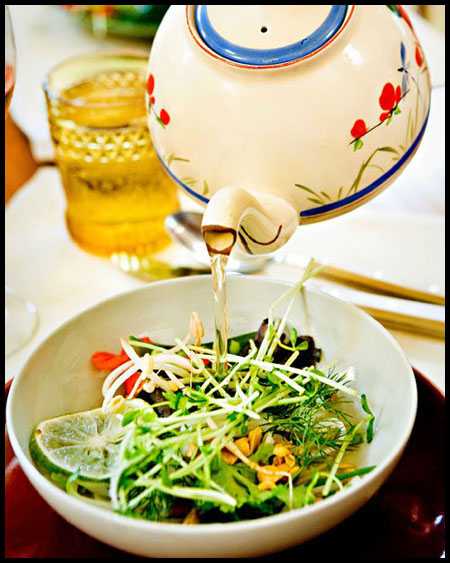
Soup with consomme pouredfrom a caremic pot.


vietnamese cuisines, american magazine
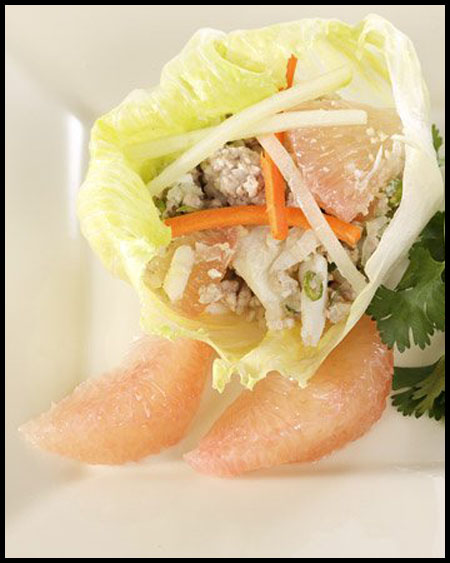
Salad with minced pork, shrimp and grapefruit.
vietnamese cuisines, american magazine
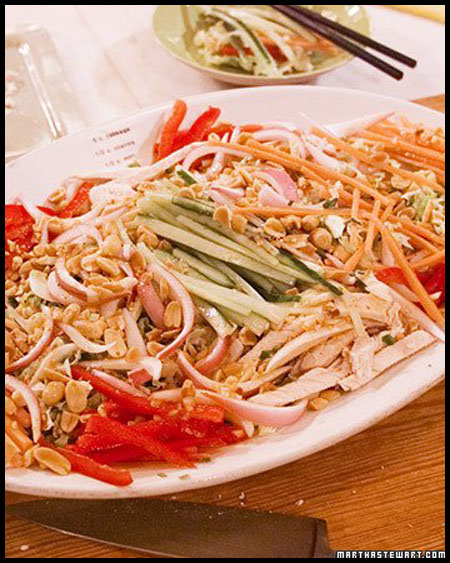
Salad with chicken.
vietnamese cuisines, american magazine
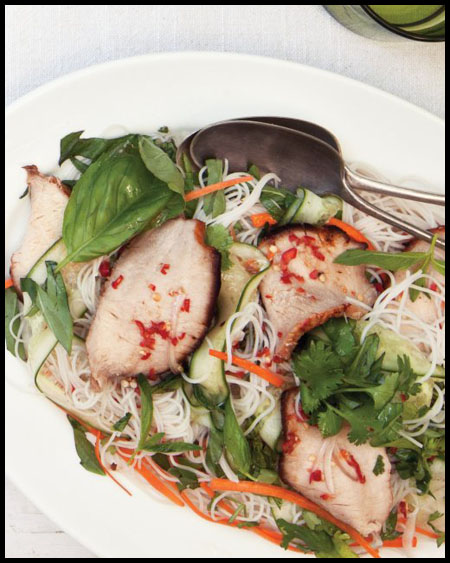
Salad with vermicelli and grilled pork.
vietnamese cuisines, american magazine
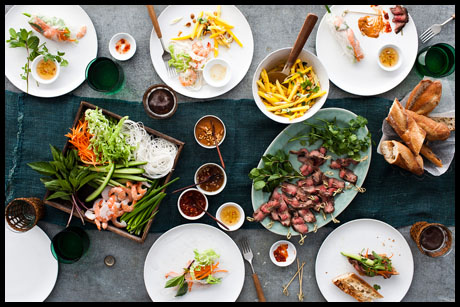
A table with many Vietnamese dishes.
 vietnamese cuisines, american magazine
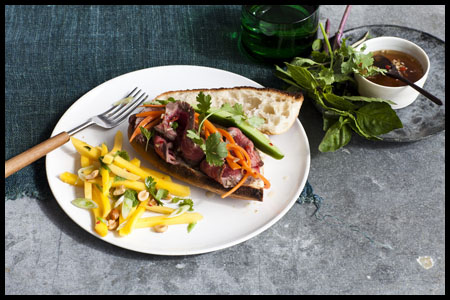
Vietnamese bread.
vietnamese cuisines, american magazine
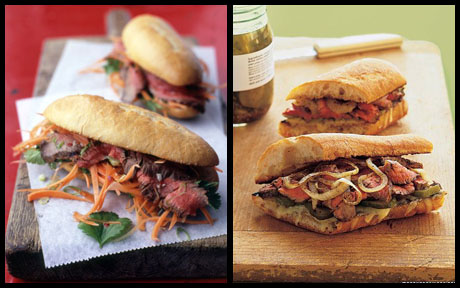
Martha StewartLiving introduces many different kinds of bread. 


vietnamese cuisines, american magazine
The difference is in the stuffing with a variety of materials.


vietnamese cuisines, american magazine
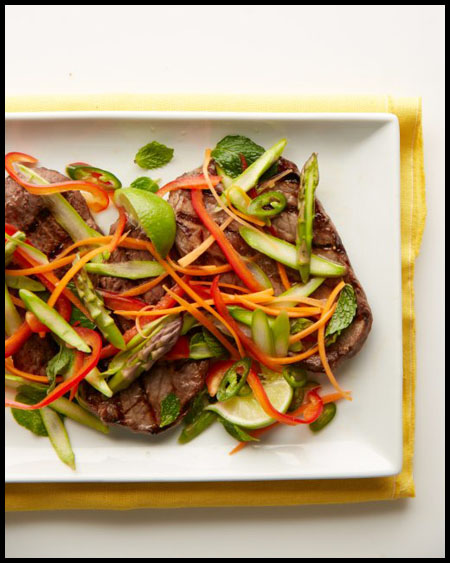
Beef steak and asparagus salad.
vietnamese cuisines, american magazine 
A cup of coffee in Vietnam style.
vietnamese cuisines, american magazine
Vietnamese cuisines are impressive because each dish goes with different sauce.
vietnamese cuisines, american magazine
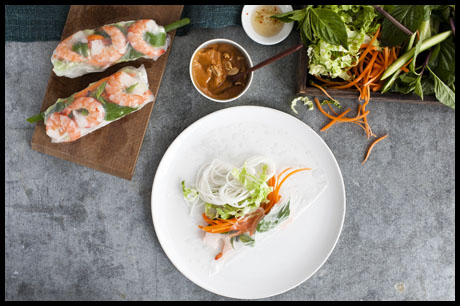
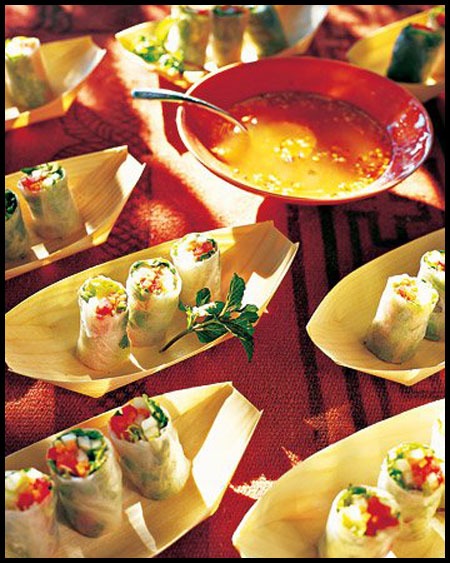
Vietnam has many kinds of spring rolls.
vietnamese cuisines, american magazine
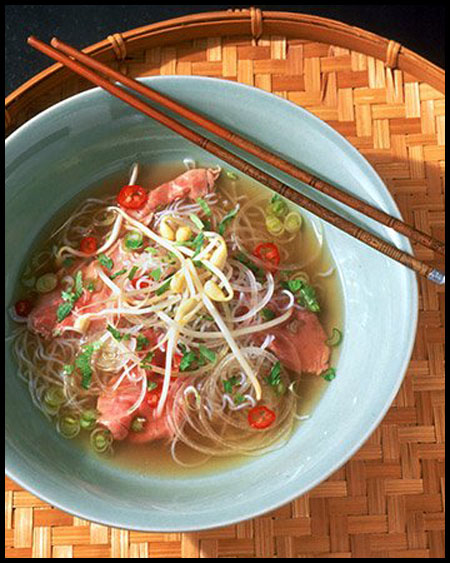
Beef vermicelli.


vietnamese cuisines, american magazine
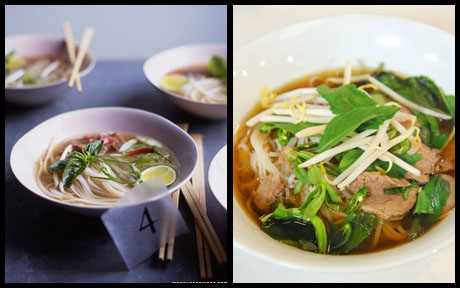
Beef noodle.


vietnamese cuisines, american magazine
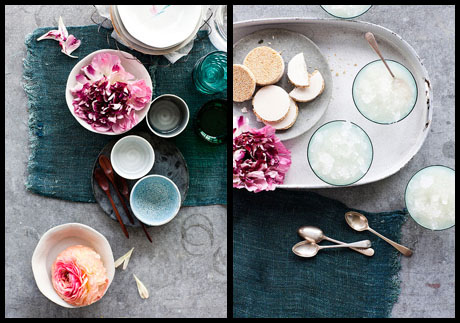
Shaved ice, litchi syrup mixed with ginger juice, served with sesame cakes.
vietnamese cuisines, american magazine
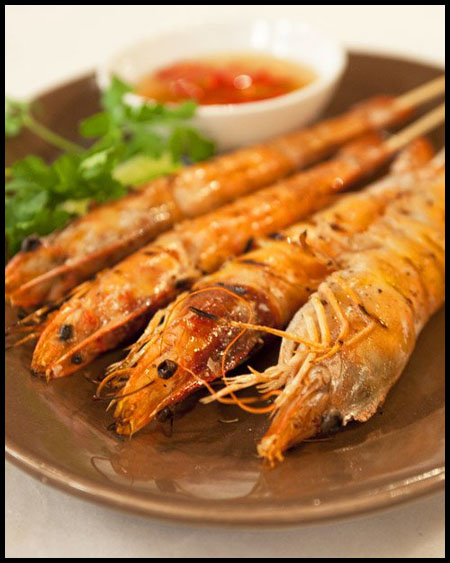
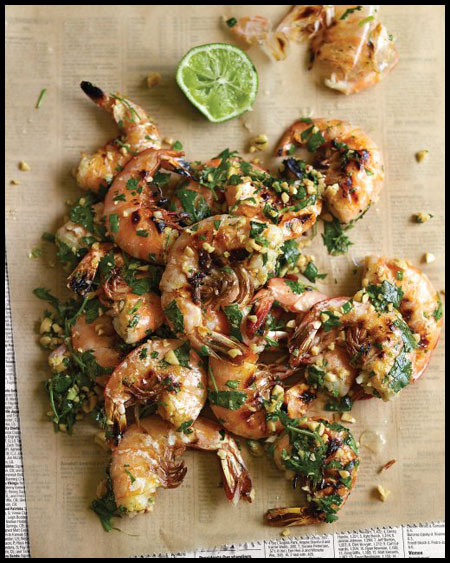
Grilled shrimp with herbs, added with crushed peanuts and a little of lemon juice.

vietnamese cuisines, american magazine
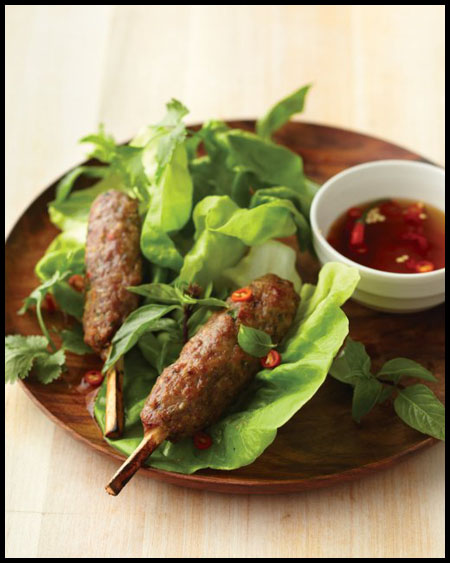
Grilled pork.


vietnamese cuisines, american magazine
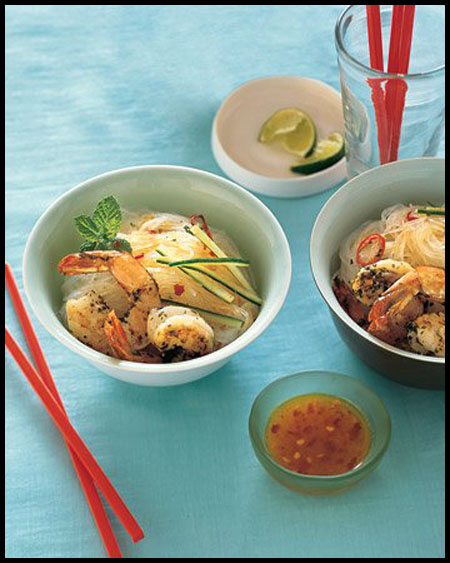
Fried vermicelli served with saute shrimp and mint leaves.
vietnamese cuisines, american magazine
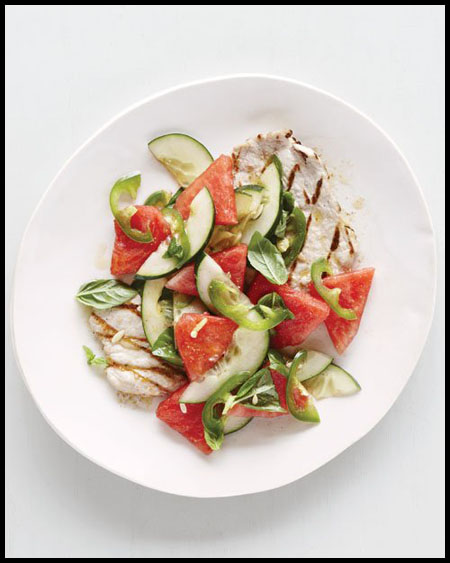
Grilled pork served with watermelon and cucumber salad.

vietnamese cuisines, american magazine 
Rice noodle with salad for hot summer days.
vietnamese cuisines, american magazine


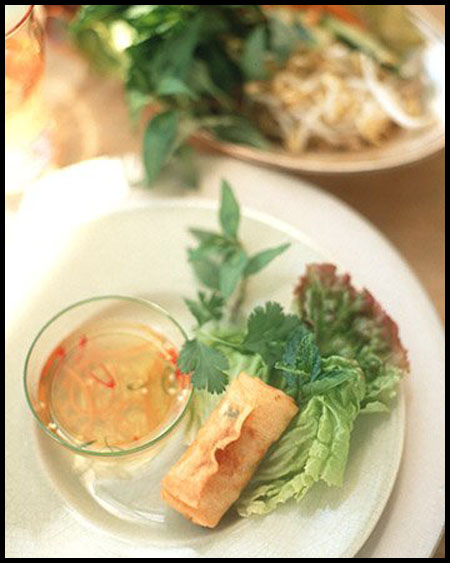
Crispy spring roll.

Chau Doc (Mekog Delta)

Chau Doc on the edge of the Mekong Delta is the stepping stone to Vietnam for travellers arriving from Cambodia. We arrived on the back of motorbikes that had collected us at the Cambodia/Vietnam border near the town of Tinh Bien which is 30km from Chau Doc (see Vietnam-Cambodia border crossings).
They dropped us at the very nice Trung Nguyen Hotel which overlooks the main market in the town centre. Nice, clean rooms with very helpful receptionist at just $10 a night. Another good budget option is the Thuan Loi Hotel which is right on the river where the ferry from Phnom Penh docks. The Song Sao Hotel is a good mid-range option located almost next to a small bookshop called 'the English Bookstore'. The charming owner loves to practice his English and will take you on private tours of the river.

21


Instead we chose to take a tour with the owner of the 'English Bookstore'. We met at his shop at 7am and walked down to the river where his friend's boat was waiting for us. First of all we headed south east along the river beyond the Victoria Hotel and met up with the approaching floating market. Our boat got right into the action and we were able to step onto one of the trader's boats as they sold all manner of fresh fruits and vegetables.
From here we crossed the river and went to see the floating fish farm houses which have fish cages under the living area. We then visited a Cham village and its mosque before returning to Chau Doc. This 2.5 hour private tour cost us just $7 for the two of us.

Sam Mountain

The other main tourist attraction of Chau Doc is Sam Mountain which is 6km from town so you'll need some transport. On our first night we were 'stalked' by one of the cyclo riders who seemed to pop up no matter which street we were on. He wanted $5 to take us to the mountain so we agreed to meet him the next afternoon and head there for sunset.


The cyclo rider picked us up at 3.30pm arriving with his wife and Downs syndrome daughter. The poor bloke works 24 hours a day to support his family as as his wife has to stay at home to look after their child. They could put her in a government school but then they'd never see her again. The cyclo man just puts his situation down to Lord Buddha and just gets on with it with a big smile on his face. A lesson to us all!
A couple of moped riders gave us a push on the way to the base of Sam Mountain then our man showed us around Tay An Pagoda, the Temple of Lady Xu and the Tomb of Thoai Ngoc Hau. The moped drivers then took us to the top of Sam Mountain (for a small fee) then waited for us so that we could watch the sunset over the endless padi fields with Cambodia in the distance.

It was a hard cycle back in the dark without the help of the mopeds, even more so when we got a puncture. When we paid the rider more than he'd asked for and paid for his puncture to be repaired ($7.50 in total) he seemed quite concerned and informed us that we'd given him more than we'd agreed and wanted to be sure that we were aware of it!

Sunday, August 11, 2013

Russian Cultural Days in Viet Nam 2013

(TITC) - From 11th to 17th November 2013, in Ha Noi, Ho Chi Minh City and Binh Duong Province, Vietnamese Ministry of Culture, Sports and Tourism collaborating with Russian Ministry of Culture will organize Russian Cultural Days in Viet Nam 2013. The event aims to implement the cooperation program in culture between Viet Nam and the Russian Federation in the period of 2013-2015.
The Russian Cultural Days in Viet Nam 2013 will include art performance programs, exhibitions and Russian film screenings. Expectedly, the opening ceremony will be held at Ha Noi Opera House on 12th November 2013. Following, art performance programs will take place in Ho Chi Minh City on 15th November and in Binh Duong Culture Centre on 16th November 2013. Attending the Russian Cultural Days in Viet Nam, Vietnamese audiences will have the opportunity to enjoy specific art items performed by famous artists and troupes of Russia; exhibitions on photos, Russian Buddhism and some contemporary works of cinema.

The cultural relation between Viet Nam and the Russian Federation has been continuously strengthened. In recent years, the two countries regularly organize unique cultural exchange activities such as: Ha Noi Days in Moscow (July 2008), Vietnamese Cultural Days in the Russian Federation (September 2008 and September 2011), Russian Film Week in Ha Noi (October 2010), Russian Cultural Days in Viet Nam (November 2010); art performance programs of the art troupes of the two countries; exhibitions on photos, stamps... Besides, Viet Nam and the Russian Federation had also implemented training programs for officials and experts on the fields of culture, arts and tourism. Especially, the two sides coordinate and support each other on the regional and international forums. The trust and mutual understanding between the two countries are also constantly consolidated. In 2012, Viet Nam welcomed 174,287 Russian tourist arrivals, up 71.5% over 2011.

The Russian Cultural Days in Viet Nam 2013 are not only the chance for Vietnamese people to understand more about Russian culture but also the opportunity to promote the beauty of the country and people of Viet Nam to Russian people; at the same time foster relationship and cooperation in culture and tourism between the two countries.

Source:vietnamtourism

Thursday, August 1, 2013

Sapa Vietnam travel guide

sapa - vietnam

Choice views of Fansipan are the prime commodity on sale in Lao Cai's signature destination, Sapa, a hill station high in the mountains which is a vestige of the French colonial era. 

Before the French came, Sapa was home to several ethnic minorities, and now that the French are gone — they're still there. Dzao, Red H'mong, and particularly Black H'mong have adapted to the tourist trade with considerable zeal, and their notoriously aggressive sales techniques should probably be attributed to how poor the region is, and how hard it is to eke out any kind of a living. 

Sapa ranks along Ha Long Bay and Hoi An in terms of attracting tourists solely on the merit of its natural beauty and surrounding attractions. It's particularly rich in opportunities for treks, homestays, and (on clear days) the kinds of panoramic views that leave travel writers searching for fresh adjectives. 

Mountaintop Sapa began life as a hilltop retreat for French colonists desperate to escape the searing heat of the Vietnamese plains. They chose the lofty cool of Fansipan's surrounds, and it's easy to see why — the humidity of Hanoi peels away as you ascend the mountain peaks skirted with finely-sculptured, emerald-green rice terraces. 

If you're only in Sapa for a few days, be forewarned that the views do not come with a money-back guarantee. The 'best' time to visit Sapa is in the summer months of August to December, when skies are more likely to be clear. These months are rainier but they are also warmer, and sometimes you can't beat a nice summer rain for atmosphere — showers are typically brief, but it pours in buckets. Winter can be cold, foggy, and rainy, but every three or four days, the weather clears and the views are more gorgeous than they are any other time of year. 

No matter what time of year you arrive, Sapa has its drawbacks and advantages. Your top priority when selecting a room in January and February should be heat. Some places have electric blankets or heaters built into the bed frame, but that means the rest of the room is going to be freezing. Electric space heaters are better, and best yet, many places come with wood-burning fire-places. Make sure the fireplace works before you hand over your passport — some we saw were only ornamental.

Here you can come into close contact with a multitude of ethnic minorities. Chief among them are the Black Hmong, so named partly because their dress is black, ornamented with colourful brocade and silver jewellery, but mostly because of their black, fez-like headgear. The Red Hmong dress in black as well, but the women wrap up their hair in a red scarf bedecked with silver-beaded tassels. The Dzao also have distinctive headwear — a pile of coiled, braided hair, with an elaborate, rectangular ornament of silver metal sticking out of the top. They will happily remove their headdress for tourists to show that it's just a hat and not their real hair. 

Since the advent of tourism these tribes have reinvented themselves as hawkers of handmade trinkets and textile goods. They are the genuine 'native' inhabitants of the area, and they clearly regard all of the political nonsense that has been going on for the past 1,000 years as background noise. People invading and leaving. Governments coming and going. Many tribes straddle the border with China, which they ignore, circulating freely on both sides. As far as they are concerned, the lowland ethnic Vietnamese who have shown up in recent years to make a buck are simply arrivistes


Sapa is sharply stratified — almost all the businesses in town are owned and staffed by Viet Kinh, and the only trade the tribes do is on the streets in the form of handicrafts, fruits and vegetables. 

The fact that the tribes continue to live a very basic existence is partly economic and partly cultural. To them, a rice field, a garden, some cattle and a stilt house are all the prosperity they ever hoped for, going back countless generations. Homestays in these same stilt houses are very popular, of course, though some villages are more 'authentic' than others. The most-easily accessed destinations feel more like 'theme resorts' for tourists, where they get to rough it local-style, though technically they are real villages. But if you venture to the more remote hamlets, they offer fascinating glimpses of lifestyles seemingly stolen from history. 

Life is probably better for the tribes than it once was, but it still takes all day to make a few dollars profit. Despite the steady flow of tourists, supply far outweighs demand. You may notice that if you wander beyond the last tourist-oriented business on any street, there are precious few businesses thriving on local dollars alone. In a sense, it's not really a town at all — the tribes live elsewhere and come into town to do business — often trudging along on foot for hours — or nowadays just as likely to jump on the back of a motorbike . The ethnic Vietnamese, for their part, are from other cities in Vietnam. Many live in cheap, shabby rooms but it still takes a lot of postcards and sweet potatoes to make the monthly rent. And there are few other options: other than family farming, since there are no major industries in the area aside from tourism. 

To describe Sapa as 'over-touristed' is a bit beside the point, since that is the sine qua non of its existence — something to think about when you are having brocade thrust into your hands or being dragged against your will into a shop. Visitors are often surprised by both the ruthless selling prowess and candour of the minorities. If you feel you've just been cursed in Hmong after refusing to buy, rest assured, you probably have. But their cunning and sales routines come just as naturally as their giggles and smiles. The Hmong in particular are as tough as they are sweet and naive as they are savvy. Patience, curiosity and a sense of humour are requisite attributes for all visitors.

Wednesday, July 31, 2013

First funicular in Vietnam constructed in BaNa Hills

BaNa Hills
The construction of the first funicular, or inclined railway, in Vietnam has been kicked off by Ba Na Service Cable Car Joint Stock Company in the central coastal city of Da Nang.
The inclined railway system, called Ba Na By Night, will have a total length of 380 metres and speed 5 metres per second, with capacity of about 80 passengers each cabin. It is built using technology of the Swiss ropeway manufacturer Garaventa.
Together with the launching of the Toc Tien Waterfall – Indochine telpher route with four Guinness World Records, the construction of the first funicular in Vietnam affirmed the uniqueness of the tourism development in Ba Na hills.
The Ba Na By Night inclined railway system is expected to be completed and operational in March 2014./.


Source: http://www.vietnamtourism.gov.vn

Tuesday, July 30, 2013

Danang Vietnam (Travel Guide)

Danang Vietnam is a town located in the western banks of River Han. Placed in the central part, it is the fourth largest city of Vietnam. With beaches, hills, heritage buildings and other lovely constructions adorning the city, Danang is definitely one of the most visited of the Vietnam popular destinations and must feature in your trip to Vietnam. Its lovely weather condition is another incentive for visiting this city.
Some of the major tourist attractions in Danang are:

Nam O Beach: Placed at a distance of 17 kilometers northwest of Danang Vietnam, it offers environmental boat rides to places like Hoa Bac and Hoa Bang district.

(China Beach) My Khe Beach: This beach is very popular among the natives and tourists alike. It offers many outdoor activities and is full of hotels, restaurants, and other services.

image3sindefx

Hai Van Pass: It is the highest pass in Vietnam, situated about 1,500 km above sea level. Literally the name stands for “pass of the ocean cloud” and is a truly beautiful place. From the peak of the pass you can see the Danang City, Tien Sa Port, Son Tra Peninsula and the sea shore, all from a birds-eye view.

Marble Mountains: Located 12 kilometers westwards from the city, this place is one of the most charming tourist attractions in Danang. It is also known as the Ngu Hanh Son or ‘Mountains of the Five Element’. Its five summits are named accordingly; Thuy Son which means water is the highest, Moc Son meaning wood, Kim Son denoting metal, Tho Son signifying soil and Hoa Son is fire. This place is also well-known for its marble crafts.
Apart from these popular tourist spots of Danang in Vietnam, there are some other well-liked spots at such as Danang Cathedral, Caodai Temple, Tam Bao Pagoda, Pho Da Pagoda, Cham Museum, Dien Hai Citadel, Ba Na Mountains, Son Tra Peninsula and lots more.

Source:http://vietnam-cambodiatravel.com/cities/danang/


12

Friday, July 26, 2013

Ha Long Bay entrance fees to increase from 2014

VietNamNet Bridge – The People’s Council of Quang Ninh Province has passed a resolution to increase the entrance fees to Ha Long Bay in order to have funding for renovation, conservation and promotion of the value of this heritage site.


ha long bay, entrance fee, bai tu long, quang ninh
Ha Long Bay entrance fees to increase from 2014

From January 1, 2014, the fees to visit Ha Long Bay in the daytime will increase up to VND150,000 ($7) per person instead of the current fees of VND80,000-VND130,000 ($4-6).
The entrance fees at each destination on the bay, which are invested by the State, will be from VND30,000 to VND50,000 ($1.5-2.5).
The overnight fees will be VND200,000, VND350,000 and VND400,000 ($10, $17, $20) for one, two and three nights, respectively.
The Council also ratified a resolution to collect the entrance fees to Bai Tu Long Bay, with the maximum fee of VND100,000 ($5) per person. However, the date for collecting the fees is not fixed yet.
Visitors who are children and some special subjects will enjoy fee reduction or exemption.
This year Quang Ninh expects to earn VND200 billion ($10 million) from the entrance fees to Ha Long Bay. With the new entrance fees, the province can earn up to VND600 billion ($30 million) in 2014.
Hai Chau(Vietnamnet.vn)

Tuesday, July 2, 2013

Ha Long Bay


Sung Sot (Surprise) Grotto
Geographical position
Situated in the north-east region of Viet Nam, Halong Bay is a part of Bac Bo Gulf and comprises the sea area of Halong City, Cam Pha Town and a part of Van Don island district, Quang Ninh Province. It borders Cat Ba Island to the south-west, the mainland to the west with a 120km-long coastline.


Geological value


Trinh Nu (Virgin) Grotto 
The most remarkable geological events of Halong Bay’s history in the last 1,000 years include the advance of the sea, the raising of the bay area and the strong erosion that has formed coral and pure blue and heavily-salted water. This process of erosion by sea water has deeply engraved the stone, contributing to its fantastic beauty. Present-day Halong Bay is the result of this long process of geological evolution that has been influenced by so many factors. It is because of all these factors that the tourists now visiting Halong Bay are not only treated to one of the true wonders of the world, but also to a precious geological museum that has been naturally preserved in the open air for the last 300 million years.


Value of biological diversity


Trong Mai (Cock and Hen) Islet 
Results of scientific research show that Halong Bay features ecosystems of a tropical ocean region such as ecosystem of coral reefs with 232 species of coral distributed mainly in the areas of Cong Do and Bo Hung. It is also home to 81 species of gastropoda, 130 species of bivalvia, 55 species of polycheta and 57 species of crab. The ecosystem of salt water-flooded forests chiefly concentrated in the zones of Tuan Chau, Cua Luc and Ba Che has the most diversified collection of species of salt water-flooded plant in North Vietnam. Also living in this ecosystem are a great many species of animals: migrating birds (200 species), polycheta (169 species), seaweed (91 species), reptile (10 species). Halong Bay also has ecosystem of tropical rain forests with various rare and precious creatures: deer, weasels, squirrels and in particular, white-tabby and red-haired monkeys. In addition, there is a system of small caves along the sea, which are the living and development places for many animals and plants: seaweed, water plant, algae, fish and shrimp. Deeper into the water, there are also many species of shrimp, fish, abalone and other sea-specialities.


Historical and cultural value


Halong is a place closely linked to Vietnam’s history with such famous geographical names as: Van Don (site of an ancient commercial port); Poem Mountain (with engravings of many poems by emperors and other famous people of the past); and Bach Dang River (the location of two fierce naval battles fought against foreign aggressors). This is not all, Halong has been proven by scientists to be one of the first cradles of human existence in the area, with such archaeological sites as Dong Mang, Xich Tho, Soi Nhu and Thoi Gieng…

Ha Long Bay seen from Bai Tho (Poem) Mountain  
On December 17, 1994, Halong Bay was recognised as world natural heritage for its natural beauty at the 18th meeting of the World Heritage Committee of UNESCO in Thailand. On December 12, 2000, Halong Bay was recognised as world natural heritage for the second time based on its geological value at the 24th meeting of the World Heritage Committee of UNESCO in Cairns, Australia. The recognised site covers an area of 434km², comprises 775 islands and forms a triangle: with Dau Go Island (Driftwood Grotto) to the west; Ba Ham Lake (Three Shelter Lake) to the south and Cong Tay Island to the east.

Source: http://www.vietnamtourism.com