Wednesday, August 14, 2013

Sword Lake(HoGuom) overflowed, many Hanoi streets flooded

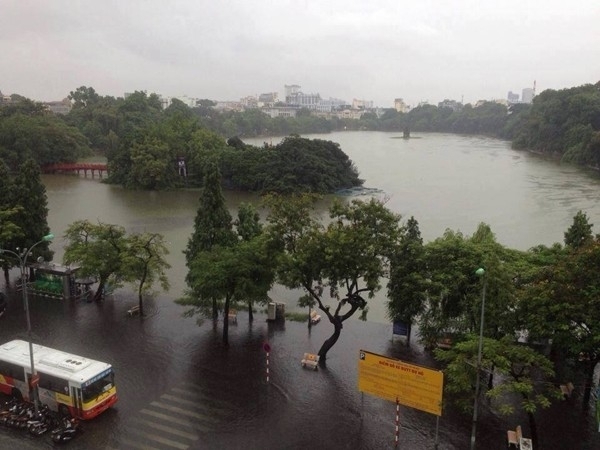
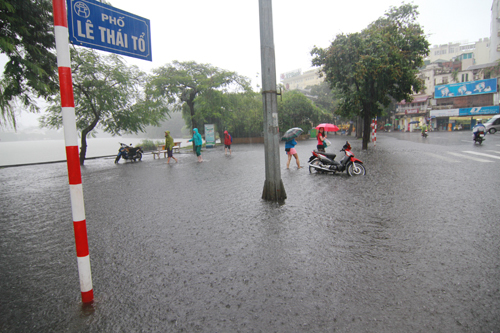
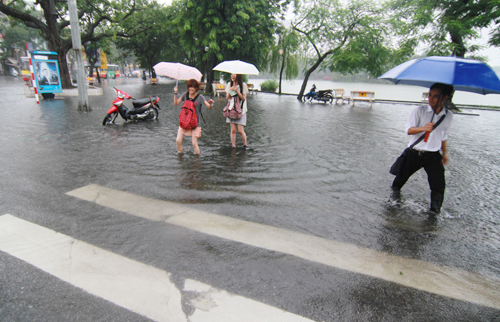
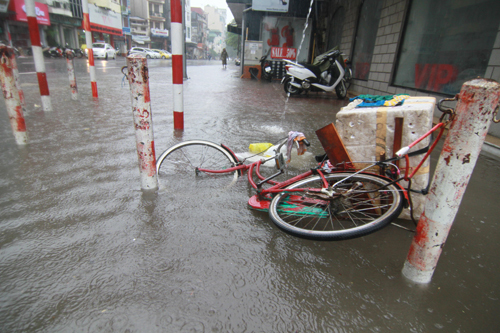
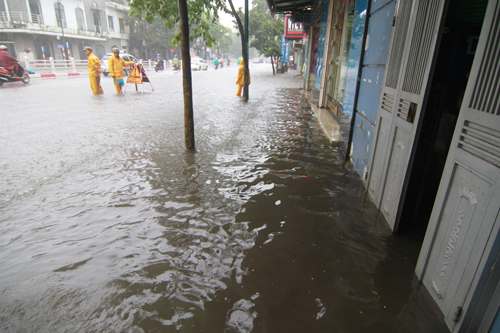
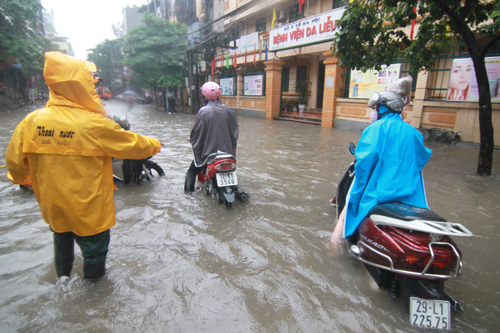
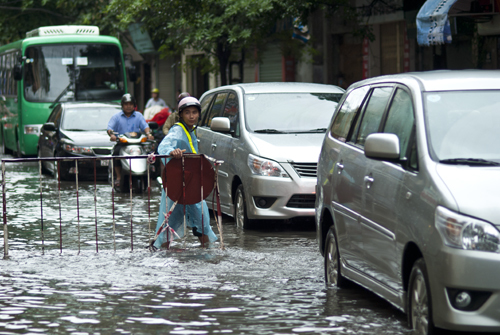
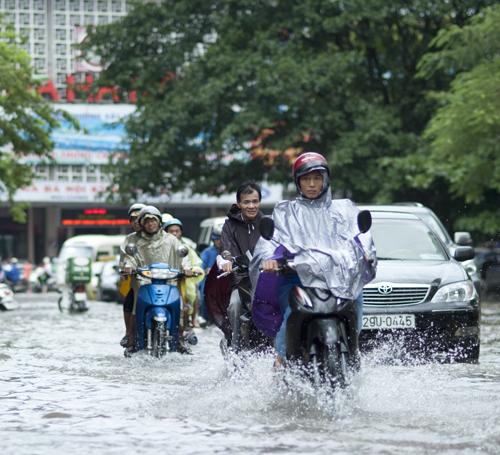
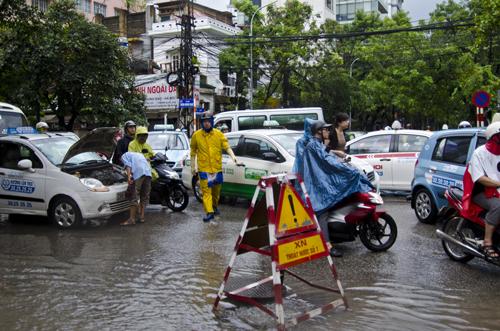
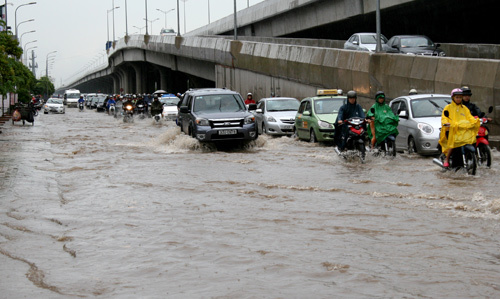
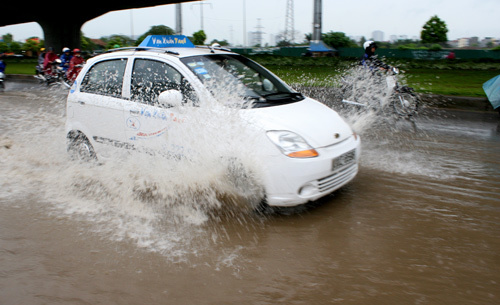
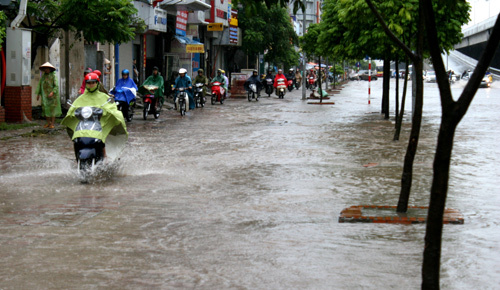
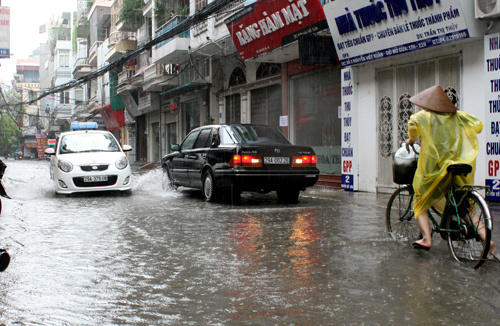
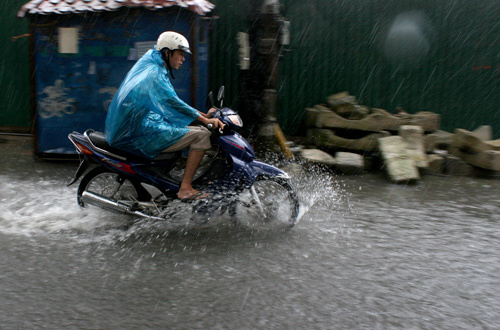
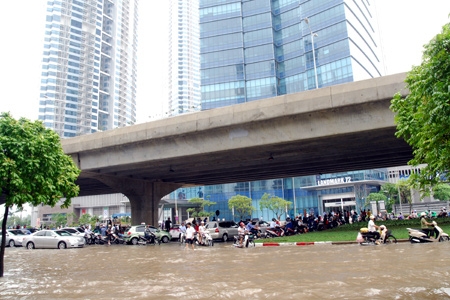
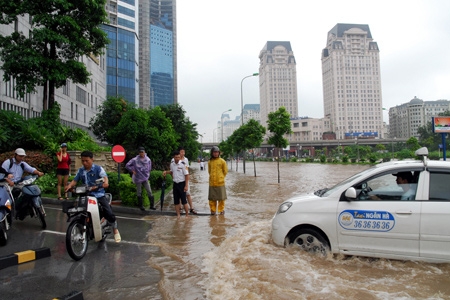
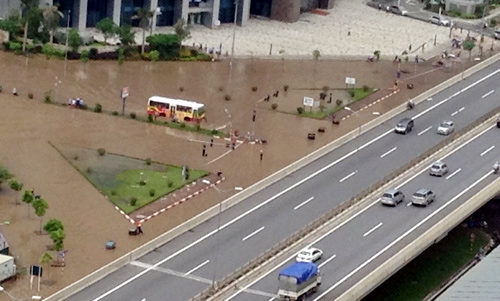
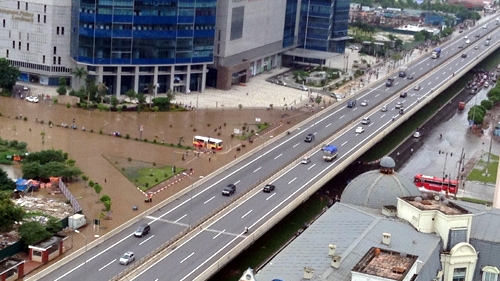
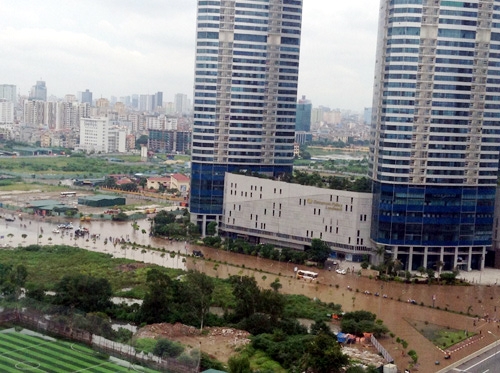
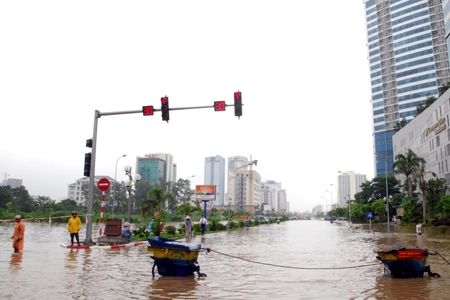
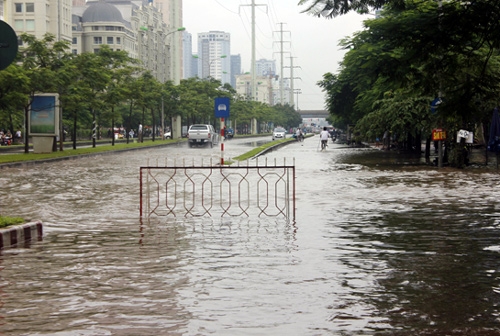
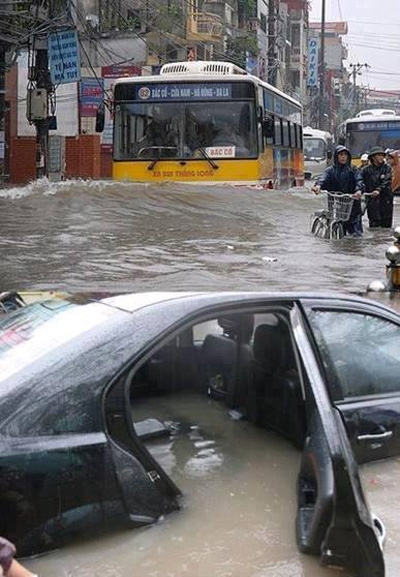
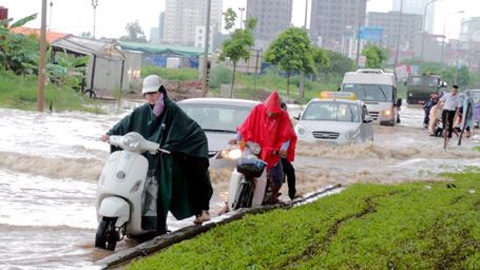
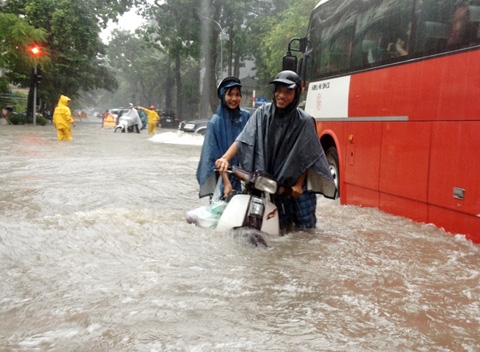
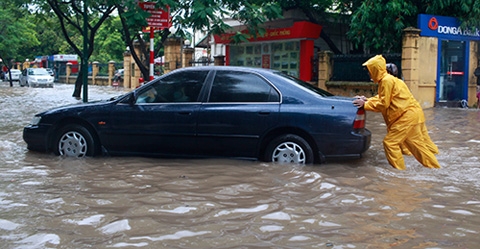
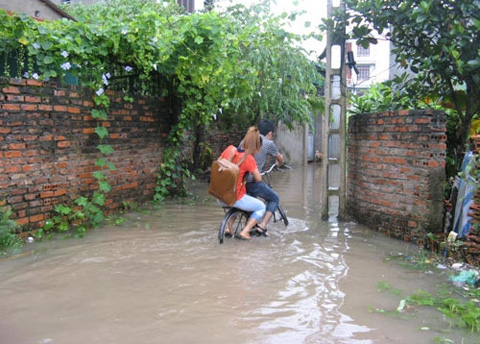
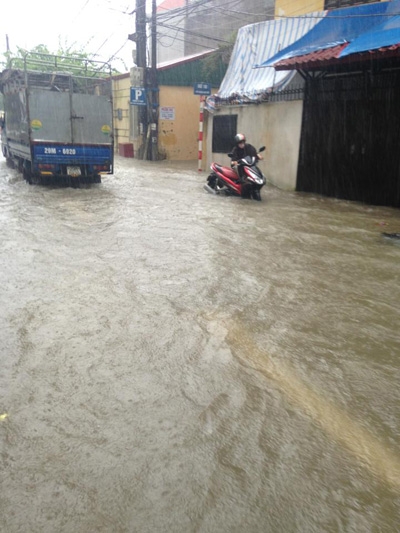
Heavy rain all day long on August 8 flooded Dinh Tien Hoang and Le Thai To, the streets around the Hoan Kiem (Sword) Lake. The other "black spots" such as Dien Bien Phu, Le Duan, Nguyen Khuyen ... were also 40-50 cm deep.


flood, sword lake, hanoi
Owing to heavy rain all day long, the Sword Lake overflowed.


flood, sword lake, hanoi


flood, sword lake, hanoi
Dinh Tien Hoang and Le Thai To streets were also flooded.


flood, sword lake, hanoi
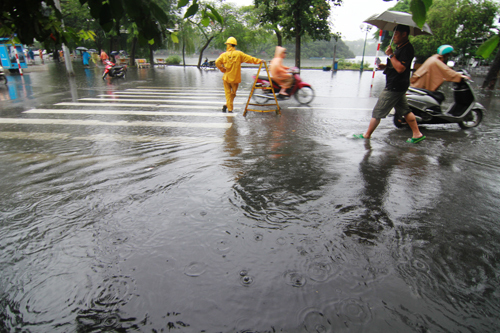
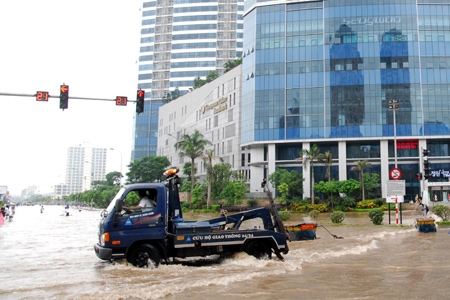
Workers were mobilized to prevent flooding in the city center.
flood, sword lake, hanoi
Water flooded the sidewalk...


flood, sword lake, hanoi
...making Dien Bien Phu Street more immense.


flood, sword lake, hanoi
Nguyen Khuyen Street.


flood, sword lake, hanoi
Part of Tho Nhuom Street was blocked to enable faster drainage.


flood, sword lake, hanoi
Tran Hung Dao Street.


flood, sword lake, hanoi
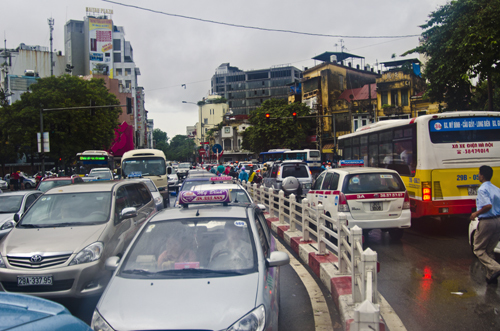
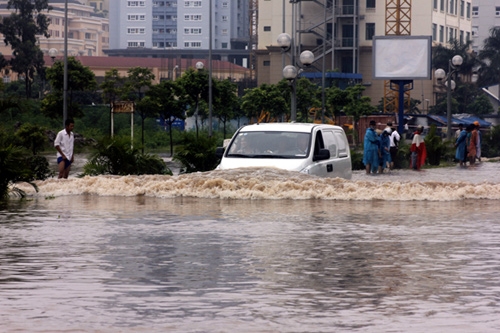
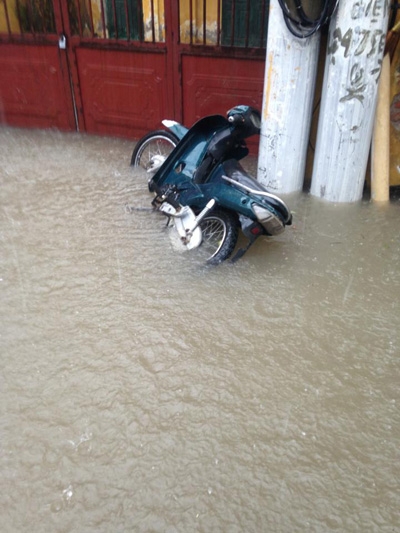
Flooding made many vehicle break down...


flood, sword lake, hanoi
Prolonged congestion at Cua Nam.


flood, sword lake, hanoi


flood, sword lake, hanoi


flood, sword lake, hanoi
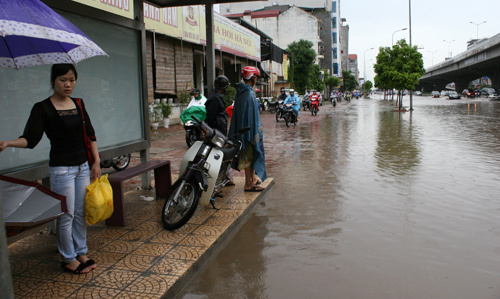
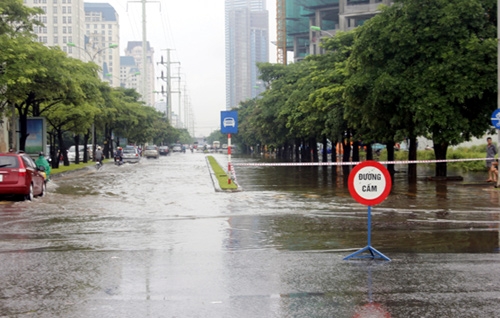
Nguyen Xien Road was 40 cm deep.


flood, sword lake, hanoi
A bus stop on Nguyen Xien Road.


flood, sword lake, hanoi


flood, sword lake, hanoi


flood, sword lake, hanoi


flood, sword lake, hanoi


flood, sword lake, hanoi


flood, sword lake, hanoi


flood, sword lake, hanoi


flood, sword lake, hanoi


flood, sword lake, hanoi


flood, sword lake, hanoi


flood, sword lake, hanoi


flood, sword lake, hanoi


flood, sword lake, hanoi


flood, sword lake, hanoi


flood, sword lake, hanoi


flood, sword lake, hanoi


flood, sword lake, hanoi


flood, sword lake, hanoi


flood, sword lake, hanoi


flood, sword lake, hanoi
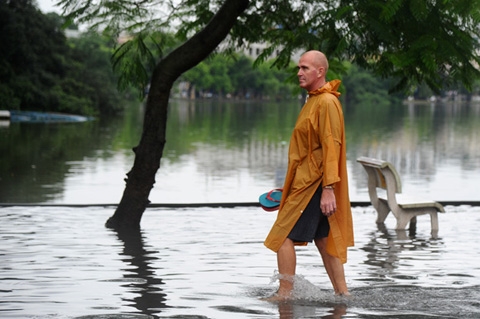
A foreign tourist at the Sword Lake (photo VOV).


flood, sword lake, hanoi

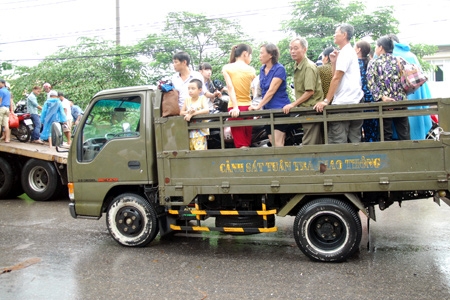
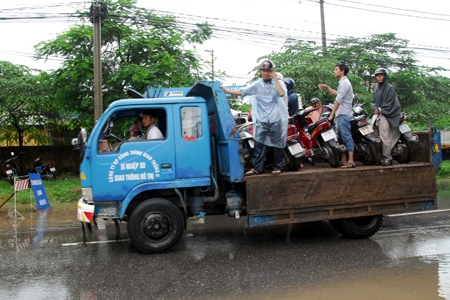
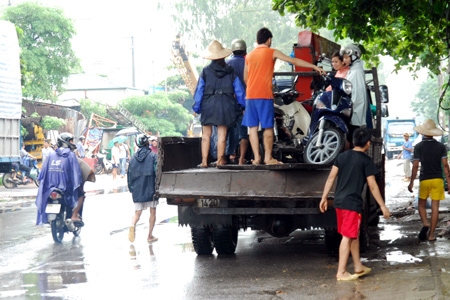
Police vehicles carry motorcycles through flooded road
Rain stopped but at noon August 9 the Road 70 in Ha Dong District, Hanoi, was still heavily flooded. The authorities sent vehicles to the site to help people.
flood, sword lake, hanoi

Top 10 unique means of transport for tourists in Vietnam

 Tourists are very excited to try unique means of transport, like three-wheeler, horse-drawn carriage, elephant ride or dug-out canoe services at tourism sites in Vietnam.
1. Three-wheeler
Tourists, transport, Quan Lan Island, Hue City, Co To Island
Photo: Trong Luan
The three-wheeler is a rudimentary means of transport. Visitors to Quan Lan Island in Quang Ninh Province are surprised to see each carrying 8-10 person.
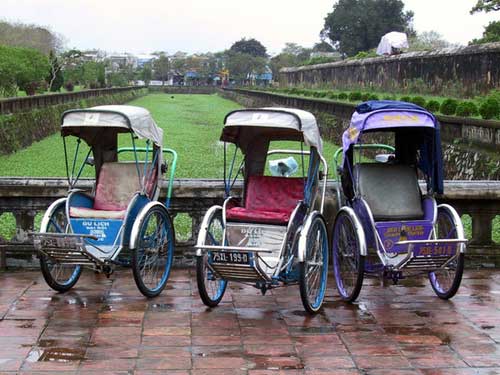
2. Cyclo
Tourists, transport, Quan Lan Island, Hue City, Co To Island
Photo: Dulichhue
The Cyclo (cycle rickshaw) is also a unique means of transport that has become very popular in central Hue City and at many tourism sites across the country. It’s high enough for two tourists on a sight-seeing tour.
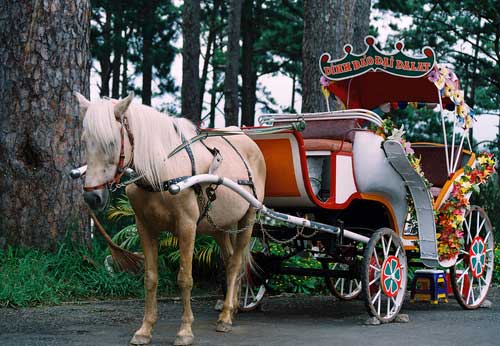
3. Horse-drawn carriage
Tourists, transport, Quan Lan Island, Hue City, Co To Island
Photo: DulichDalat
It is a vehicle most favoured by travellers to the sea, coastal and highland areas, who like to hear the hoofs and tinkling sounds of tintinnabulum.
4. Elephant ride
Tourists, transport, Quan Lan Island, Hue City, Co To Island
Photo: Dulichtaynguyen
Tourists to the Central Highland region never miss the chance to ride tame elephants around a hamlet or cross the Serepok River.
5. Tandem bicycle
Tourists, transport, Quan Lan Island, Hue City, Co To Island
Visitors to Bai Chay, Haiphong, Danang or Vung Tau feel quite relaxed to ride tandem bikes along the sandy beaches.
6. Tramcar
Tourists, transport, Quan Lan Island, Hue City, Co To Island
Photo: coto.gov.vn
It is a green electric vehicle often seen running in Hanoi, Ninh Binh and Danang, even on Co To Island – 80km far from the mainland where it can transport 6-8 passengers smoothly around this pearl island.
7. Rowing kayak
Tourists, transport, Quan Lan Island, Hue City, Co To Island
Photo:  dulichvietnam
The Kayak boat is mainly for those who like adventure tourism. It looks like a Vietnamese dug-out canoe. Visitors to to Ha Long, Haiphong and Nha Trang will have the chance to enjoy this kind of tourism service.
8. Helicopter
Tourists, transport, Quan Lan Island, Hue City, Co To Island
Photo: dulichvietnam
This is a new tourism service provided at Ha Long, Sapa and Cat Ba sites for those who wish to see the whole scenery at an attitude of 300m.
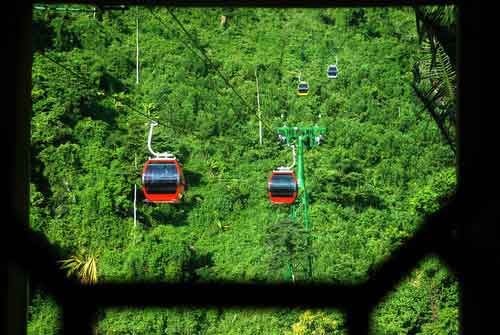
9. Cable car
Tourists, transport, Quan Lan Island, Hue City, Co To Island
Photo: dulichvietnam
This means of transport is now available at Vinpearland in Nha Trang, Ba Na in Danang and Yen Tu in Quang Ninh to save travel time for tourists.
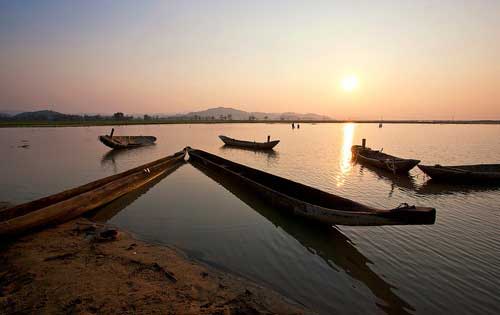
10. Dug-out canoe
Tourists, transport, Quan Lan Island, Hue City, Co To Island
Photo: dulichvietnam
This is not only a unique means of transport but also a special cultural feature of Central Highland and North-Western regions that has proved a hit with many first-time visitors.
Source: VOV

Tuesday, August 13, 2013

Quang Ninh to offer water-taxi for tourists


water-taxi for tourists
Water-taxi for tourists
The Quang Ninh provincial People’s Committee has accepted the proposal from Au Lac Quang Ninh Joint Stock Company to invest a water-taxi system under the authority.
The People’s Committee assigned the Quang Ninh provincial Department of Transport in collaboration with the Department of Culture, Sports and Tourism, Ha Long City People’s Committee and relevant agencies to directly guide and supervise the Au Lac Quang Ninh Joint Stock Company to build the system safety as current regulations.
This new service will offer another choice for tourists to visit Ha Long Bay, thus providing a tourism product with modern means of transportation./.
 Source: .vietnamtourism

Sunday, August 11, 2013

Russian Cultural Days in Viet Nam 2013

(TITC) - From 11th to 17th November 2013, in Ha Noi, Ho Chi Minh City and Binh Duong Province, Vietnamese Ministry of Culture, Sports and Tourism collaborating with Russian Ministry of Culture will organize Russian Cultural Days in Viet Nam 2013. The event aims to implement the cooperation program in culture between Viet Nam and the Russian Federation in the period of 2013-2015.
The Russian Cultural Days in Viet Nam 2013 will include art performance programs, exhibitions and Russian film screenings. Expectedly, the opening ceremony will be held at Ha Noi Opera House on 12th November 2013. Following, art performance programs will take place in Ho Chi Minh City on 15th November and in Binh Duong Culture Centre on 16th November 2013. Attending the Russian Cultural Days in Viet Nam, Vietnamese audiences will have the opportunity to enjoy specific art items performed by famous artists and troupes of Russia; exhibitions on photos, Russian Buddhism and some contemporary works of cinema.

The cultural relation between Viet Nam and the Russian Federation has been continuously strengthened. In recent years, the two countries regularly organize unique cultural exchange activities such as: Ha Noi Days in Moscow (July 2008), Vietnamese Cultural Days in the Russian Federation (September 2008 and September 2011), Russian Film Week in Ha Noi (October 2010), Russian Cultural Days in Viet Nam (November 2010); art performance programs of the art troupes of the two countries; exhibitions on photos, stamps... Besides, Viet Nam and the Russian Federation had also implemented training programs for officials and experts on the fields of culture, arts and tourism. Especially, the two sides coordinate and support each other on the regional and international forums. The trust and mutual understanding between the two countries are also constantly consolidated. In 2012, Viet Nam welcomed 174,287 Russian tourist arrivals, up 71.5% over 2011.

The Russian Cultural Days in Viet Nam 2013 are not only the chance for Vietnamese people to understand more about Russian culture but also the opportunity to promote the beauty of the country and people of Viet Nam to Russian people; at the same time foster relationship and cooperation in culture and tourism between the two countries.

Source:vietnamtourism

Friday, August 2, 2013

Da Nang boost tourism push

Da Nang boost tourism push
More than 80 travel agencies, hotels and transport companies have come together in an effort to boost tourism to the central coastal city of Da Nang.
The promotion programme was launched on July 31 with the aim to attract 3 million domestic visitors this year to the region, especially during the low season, between September and December.
“As many as 52 hotels in the city have committed to discount bookings from 10 to 50 percent, while 10 major tours will offer from 20 to 25 percent off as the usual price,” said Ngo Thi Hoang Anh, deputy head of the Accommodation Service for the Department of Culture, Sports and Tourism.
“We want to attract tourists from Hanoi , Ho Chi Minh City , the Republic of Korea , China and Thailand during the rainy season and make inroads with Meeting, Incentives, Conferencing and Exhibition (MICE) tourism,” she said.
She said Green Plaza in the city would offering a 40 percent discount during the promotion, while five-star resorts Furama (Sandy Beach), Ba Na mountain resort and Debay hotels were also offering a 20 or 30 percent discount.
Budget Airline, Jetstar, was also offering promotional flights from Hanoi and HCM City to Da Nang for only 99,990 VND per ticket (4.7 USD) on Friday.
Restaurants and markets will give a 10 percent discount in peak times as well as 30 percent off during the three months of the promotion.
The Cham Sculpture Museum and Nguyen Hien Dinh Theatre of Tuong (Classical Drama) will offer 50 percent off ticket prices in December.
However, the general secretary of the city’s tourism association, Trinh Bang Co, said the programme should be a year round effort.
“We should do the promotion programme every quarter and during big festivals to attract more tourists. Travel agencies and hotels need to cooperate closely to host visitors with the best service,” Co said.
“The city’s major tourists come from Hanoi , HCM City and northern provinces , and the city has to introduce its promotion programme nationwide,” he said.
Nguyen Van Xuan from Sai Gon Tourane hotel said that booking discounts should not be a crucial factor in the promotion, rather the quality of service should be important.
“Tourists do not come to sleep and eat in the city. They want to join attractive and exciting tour programmes with the best quality and hospitality,” Xuan speculated.
Deputy director of the city’s Culture, Sports and Tourism Department Tran Chi Cuong said the city will launch a roadshow programme to promote tourism in the Mekong Delta; Bangkok , Thailand ; Russia and China from this month.

The city has hosted 1.5 million tourists in the first six months of this year.

Thursday, August 1, 2013

HaLong Bay Travel Guide

Halong vietnam travel guide
A cruise on Ha Long Bay -- or theBay of the Descending Dragon -- for many represents the pinnacle of their experience in Vietnam. easily one of the most popular destinations in the country, UNESCO World Heritage-listed Ha Long Bay is both mystical and magnificent, an incredible feat of nature that almost never fails to impress.

Yes, it really is that good.

Last time we counted, UNESCO had picked out 830 World Heritage sites around the world, chosen for their cultural and historical importance, and also for their geological uniqueness. Ha Long Bay offers a little of all three.

It's not the cliffs themselves that make Ha Long Bay unique, but rather their sheer number. A huge bay, dotted with nearly 2,000 mostly uninhabited limestone cliffs, the breathtaking scenery is very similar to that of the Andaman coast of Thailand, Vang Vieng in Laos and Guilin in China.

Created over millions of years, tectonic forces slowly thrust the limestone above the water-line. During this process waves lapping against the stone carved out a number of vast, striking caverns, as well as other geologically interesting formations, such as tunnel caves and uniquely shaped massifs.

Over the ages, Vietnamese fishermen with too much time on their hands began to see shapes in the stone massifs atop many of the islands, and named the islands accordingly -- Turtle Island, Human Head Island, Chicken Island and so on.
In what constitutes one of the most fascinating cultural features of the area, some of these fisherman still live on the bay today -- on floating fishing villages, where houses are set atop barges year round, the inhabitants catching and cultivating fish throughout.

Ha Long Bay cruises mostly run out of Hanoi or the coastal town of Halong City (which faces out and over the bay). There are hundreds of agencies selling tours on the bay, but very few actually run their own boats -- instead most are consolidators or resellers. Organising a tour is very much a buyer beware scenario -- talk to other travellers and shop around -- if you're paying $15 a head for a two day tour of Ha Long Bay rest assured it will be pretty dodgy. Try to include a stay on Cat Ba Island if you can.

Sapa Vietnam travel guide

sapa - vietnam

Choice views of Fansipan are the prime commodity on sale in Lao Cai's signature destination, Sapa, a hill station high in the mountains which is a vestige of the French colonial era. 

Before the French came, Sapa was home to several ethnic minorities, and now that the French are gone — they're still there. Dzao, Red H'mong, and particularly Black H'mong have adapted to the tourist trade with considerable zeal, and their notoriously aggressive sales techniques should probably be attributed to how poor the region is, and how hard it is to eke out any kind of a living. 

Sapa ranks along Ha Long Bay and Hoi An in terms of attracting tourists solely on the merit of its natural beauty and surrounding attractions. It's particularly rich in opportunities for treks, homestays, and (on clear days) the kinds of panoramic views that leave travel writers searching for fresh adjectives. 
Mountaintop Sapa began life as a hilltop retreat for French colonists desperate to escape the searing heat of the Vietnamese plains. They chose the lofty cool of Fansipan's surrounds, and it's easy to see why — the humidity of Hanoi peels away as you ascend the mountain peaks skirted with finely-sculptured, emerald-green rice terraces. 

If you're only in Sapa for a few days, be forewarned that the views do not come with a money-back guarantee. The 'best' time to visit Sapa is in the summer months of August to December, when skies are more likely to be clear. These months are rainier but they are also warmer, and sometimes you can't beat a nice summer rain for atmosphere — showers are typically brief, but it pours in buckets. Winter can be cold, foggy, and rainy, but every three or four days, the weather clears and the views are more gorgeous than they are any other time of year. 

No matter what time of year you arrive, Sapa has its drawbacks and advantages. Your top priority when selecting a room in January and February should be heat. Some places have electric blankets or heaters built into the bed frame, but that means the rest of the room is going to be freezing. Electric space heaters are better, and best yet, many places come with wood-burning fire-places. Make sure the fireplace works before you hand over your passport — some we saw were only ornamental.

Here you can come into close contact with a multitude of ethnic minorities. Chief among them are the Black Hmong, so named partly because their dress is black, ornamented with colourful brocade and silver jewellery, but mostly because of their black, fez-like headgear. The Red Hmong dress in black as well, but the women wrap up their hair in a red scarf bedecked with silver-beaded tassels. The Dzao also have distinctive headwear — a pile of coiled, braided hair, with an elaborate, rectangular ornament of silver metal sticking out of the top. They will happily remove their headdress for tourists to show that it's just a hat and not their real hair. 

Since the advent of tourism these tribes have reinvented themselves as hawkers of handmade trinkets and textile goods. They are the genuine 'native' inhabitants of the area, and they clearly regard all of the political nonsense that has been going on for the past 1,000 years as background noise. People invading and leaving. Governments coming and going. Many tribes straddle the border with China, which they ignore, circulating freely on both sides. As far as they are concerned, the lowland ethnic Vietnamese who have shown up in recent years to make a buck are simply arrivistes


Sapa is sharply stratified — almost all the businesses in town are owned and staffed by Viet Kinh, and the only trade the tribes do is on the streets in the form of handicrafts, fruits and vegetables. 

The fact that the tribes continue to live a very basic existence is partly economic and partly cultural. To them, a rice field, a garden, some cattle and a stilt house are all the prosperity they ever hoped for, going back countless generations. Homestays in these same stilt houses are very popular, of course, though some villages are more 'authentic' than others. The most-easily accessed destinations feel more like 'theme resorts' for tourists, where they get to rough it local-style, though technically they are real villages. But if you venture to the more remote hamlets, they offer fascinating glimpses of lifestyles seemingly stolen from history. 

Life is probably better for the tribes than it once was, but it still takes all day to make a few dollars profit. Despite the steady flow of tourists, supply far outweighs demand. You may notice that if you wander beyond the last tourist-oriented business on any street, there are precious few businesses thriving on local dollars alone. In a sense, it's not really a town at all — the tribes live elsewhere and come into town to do business — often trudging along on foot for hours — or nowadays just as likely to jump on the back of a motorbike . The ethnic Vietnamese, for their part, are from other cities in Vietnam. Many live in cheap, shabby rooms but it still takes a lot of postcards and sweet potatoes to make the monthly rent. And there are few other options: other than family farming, since there are no major industries in the area aside from tourism. 

To describe Sapa as 'over-touristed' is a bit beside the point, since that is the sine qua non of its existence — something to think about when you are having brocade thrust into your hands or being dragged against your will into a shop. Visitors are often surprised by both the ruthless selling prowess and candour of the minorities. If you feel you've just been cursed in Hmong after refusing to buy, rest assured, you probably have. But their cunning and sales routines come just as naturally as their giggles and smiles. The Hmong in particular are as tough as they are sweet and naive as they are savvy. Patience, curiosity and a sense of humour are requisite attributes for all visitors.